How Long Should My Kitchen Linens Last?
Longevity begins with quality. There are countless kitchen linens on the market, but they are not all made with the same fibres, weave, finish or purpose. A cloth that looks useful on the shelf may tire quickly in a real kitchen, while a properly woven linen tea towel or glass cloth can become better, softer and more absorbent with use.
Britain and Ireland once stood at the heart of textile production, with skilled makers producing cloths for highly specific tasks. Many of those traditions have faded, replaced by cheaper mass market alternatives that often rely on appearance rather than performance. Yet the best kitchen linen still has a practical beauty. It dries well, polishes cleanly, washes reliably and lasts far longer than an ordinary cloth.
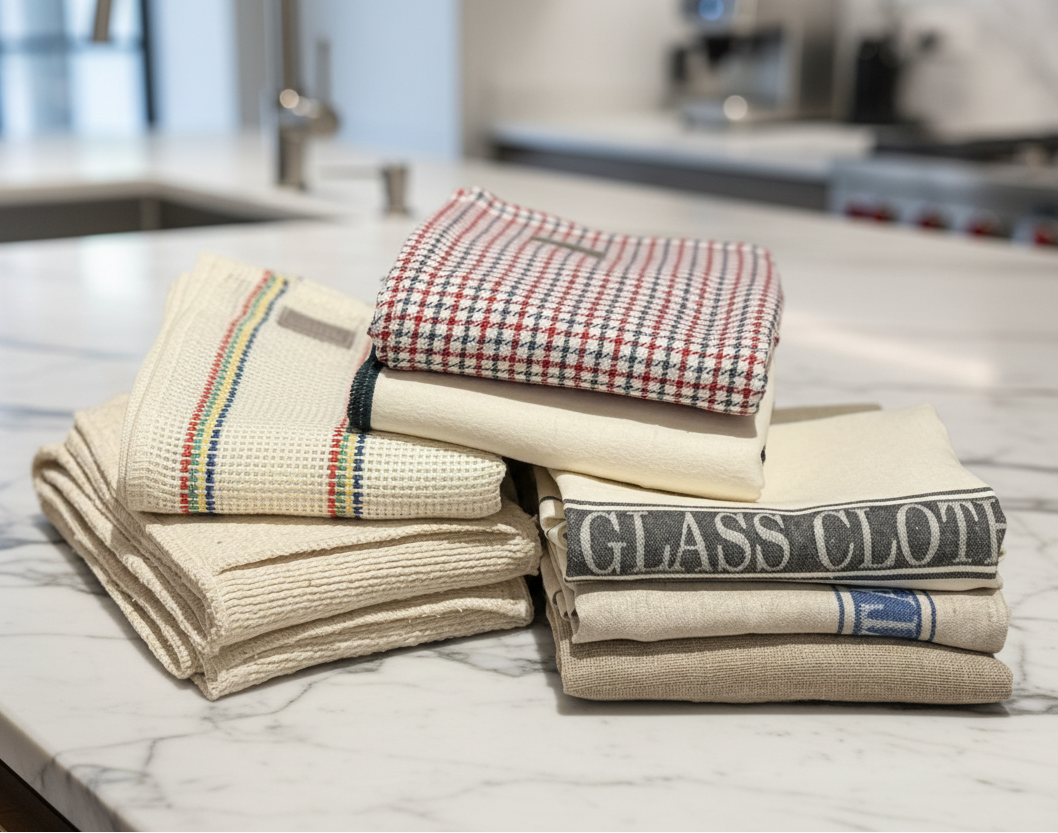
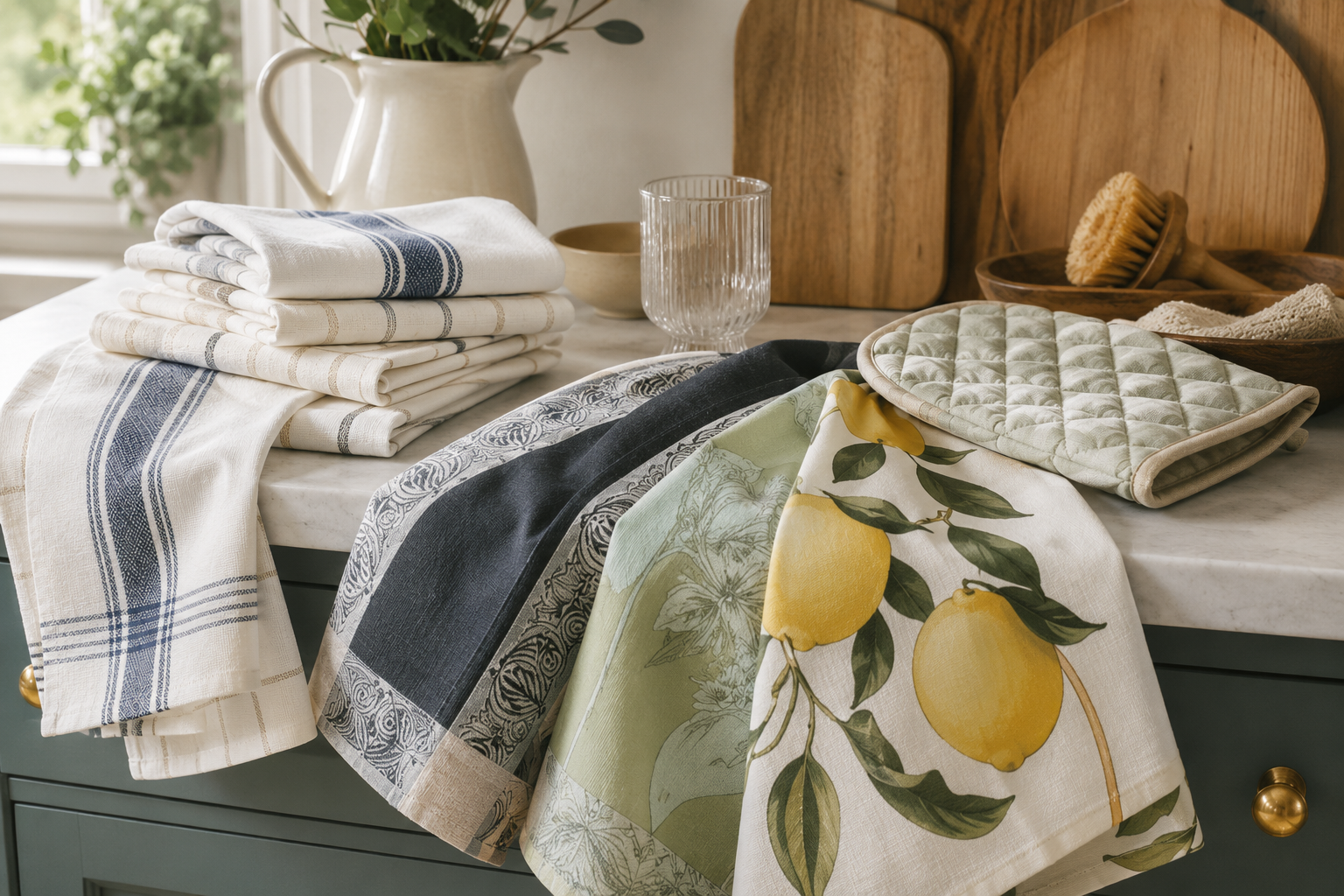
When you choose from our kitchen linen range, you are choosing pieces designed for real daily use, from linen tea towels and glass cloths to oven gloves, dishcloths, polishing cloths and kitchen hand towels.

Why Quality Matters in Kitchen Linen
Kitchen linen works hard. It dries glassware, handles hot dishes, wipes surfaces, polishes silver, protects hands and absorbs spills. For that reason, good kitchen linen should not be judged only by how it looks. It should be judged by how well it performs after repeated washing.
Pure linen is especially valued because it is strong, absorbent and naturally lint free, making it ideal for drying glassware and polishing. Cotton has its own place too, particularly for oven gloves, hand towels and everyday cloths where softness, flexibility and frequent washing matter.
The real difference lies in purpose. A tea towel is not quite the same as a glass cloth. A dishcloth is not quite the same as a polishing cloth. Choosing the right cloth for the right task means each piece lasts longer and performs better.
For drying and polishing, start with tea towels and glass cloths. For heat protection and heavier kitchen work, explore oven gloves, cloths and mitts.
Woods for All Your Kitchen Linen Needs
Our collection brings together traditional kitchen linens chosen for their usefulness, durability and specialist qualities. These are the quiet workhorses of a well-run kitchen, not decorative extras that look good for a fortnight and then surrender. We have all owned one of those. Usually it frays just as guests arrive.
The range includes fine Irish linen glass cloths, traditional oven gloves, the famous linen dishcloths, linen window scrims, kitchen towels, hanging cotton hand towels, twill check dusters, super polishing cloths and other practical pieces made to do a specific job properly.
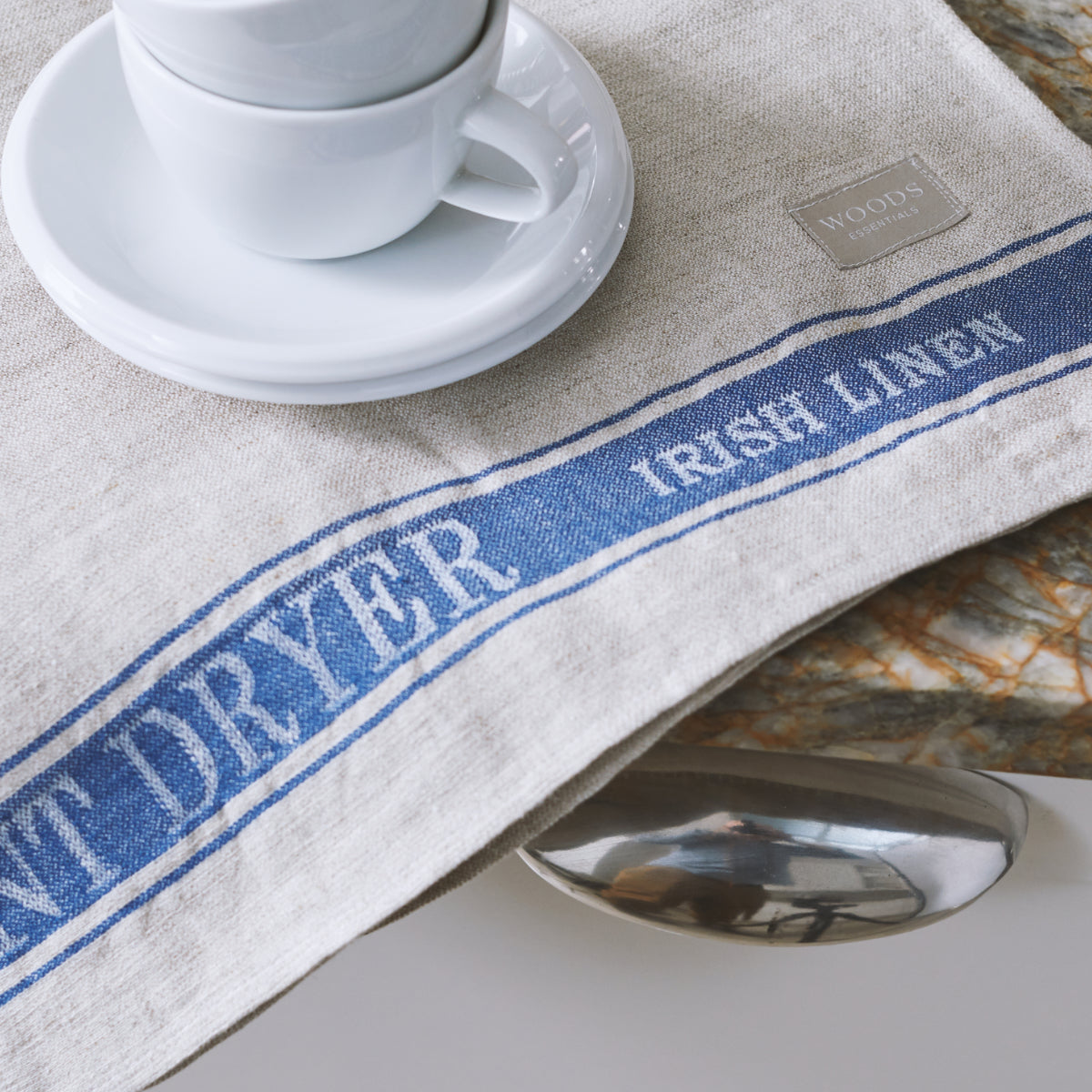
When it is time to replace, our kitchen linen range is built to last, with the Famous 100% Linen Dishcloth and Irish Linen Tea Towel being the workhorses most worth the investment.

How Long Do Kitchen Linens Usually Last?
The lifespan of kitchen linen depends on how often it is used, how it is washed and whether it is being used for the right job. A tea towel used gently for drying clean dishes will naturally last longer than a dishcloth used several times a day for wiping surfaces.
| Product | Typical lifespan | Signs it needs replacing |
|---|---|---|
| Tea towels, linen | 5+ years with care | Loss of absorbency, thinning, fraying edges, staining that will not wash out |
| Dishcloths, linen | 1 to 2 years with heavy daily use | Persistent odour, fraying, reduced scrubbing texture |
| Oven gloves | 2 to 4 years | Scorch marks, thinning padding, reduced heat protection |
| Glass cloths | 3 to 5 years | Linting, loss of polish, holes or thinning |
These are sensible guidelines, not hard rules. A well cared for linen tea towel can last for many years. A heavily used dishcloth may need replacing sooner, especially if it is used daily, washed frequently and exposed to food residue, grease or cleaning products.
For everyday wiping and drying near the sink, kitchen hand towels are a practical addition, helping to keep specialist linen tea towels and glass cloths reserved for the tasks they do best.
How Should You Wash Kitchen Linens?
How you wash kitchen linen has a direct effect on how long it lasts. Strong detergents, fabric softeners, excessive bleach and high heat can all shorten the life of a cloth.
Cotton products should generally be treated gently. Bleach can weaken fibres and affect colour, particularly with repeated use. Powdered washing detergents often contain bleaching agents, so it is worth checking the label and choosing a gentler liquid detergent where appropriate.
Linen is naturally durable and can withstand frequent washing, which is why it has been trusted in kitchens for generations. Some traditional linen cloths, such as the famous Irish linen dishcloth, are made for demanding use. Even so, following the care instructions will help preserve the weave, absorbency and finish.
A good rule is to wash kitchen linens regularly, avoid fabric conditioner and dry them thoroughly before storing. Fabric conditioner can coat the fibres and reduce absorbency, which rather defeats the purpose of a cloth designed to dry beautifully.

When Should You Replace Tea Towels and Dishcloths?
A good quality tea towel should last years, not months. The best examples are often made from pure linen or a linen cotton blend, because these fibres soften and become more absorbent over time.
You should replace a tea towel when it becomes thin, loses absorbency, develops frayed edges or holds stains that no longer wash out. Dishcloths usually have a shorter working life because they are exposed to heavier use, moisture and surface cleaning. Persistent odour, reduced texture and fraying are all signs that a dishcloth has done its duty.
Glass cloths should be replaced when they begin to lint, leave marks or lose their ability to polish cleanly. A proper glass cloth should leave glassware bright, clear and free from fibres.
For silver, glass and finer finishing work, our polishing cloths are designed for a more precise task than ordinary kitchen cloths.
The Best Saving Is Buying Well Once
Cheap kitchen linen can feel like a saving, but only until it starts to thin, smell, lint, scorch or lose absorbency. Better pieces last longer because they are made from better fibres, woven with greater care and designed for a clear purpose.
A well-made linen tea towel can serve a busy kitchen for three to five years or more with sensible care. A traditional glass cloth can polish beautifully for years. A strong dishcloth should remain useful through heavy, repeated washing. The difference is not just lifespan, but daily pleasure. Good linen simply feels better in the hand and does the job with less fuss.
For more notes on lasting materials, traditional household textiles and carefully chosen pieces for the home, join The Heritage Partnership. It is our way of sharing the quieter details behind a better kept home, from the fibres that work hardest in a kitchen to the small choices that make everyday routines feel more considered. You will find guidance on care, quality, craftsmanship and long lived linen, along with thoughtful updates from Woods for those who value practical beauty as much as refinement.