kitchen linen buyers guide
Kitchen Linen Buyers Guide
Kitchen linen is not glamorous, which is exactly why it matters. It is the equipment you use daily without thinking. The tea towel you reach for on autopilot. The cloth that makes a wine glass look properly clean. The dishcloth that either stays fresh, or turns the worktop into a constant irritation.
Most people only notice kitchen linen when it disappoints. It smears. It sheds fluff. It stays damp. It starts to smell far too quickly. The good pieces do the opposite. They dry quickly, feel crisp in the hand, and keep the kitchen running smoothly without constant effort.
If you want to see everything in one place as you read, explore our kitchen linen collection.

What matters most, quickly
-
Fast drying beats thick and damp
-
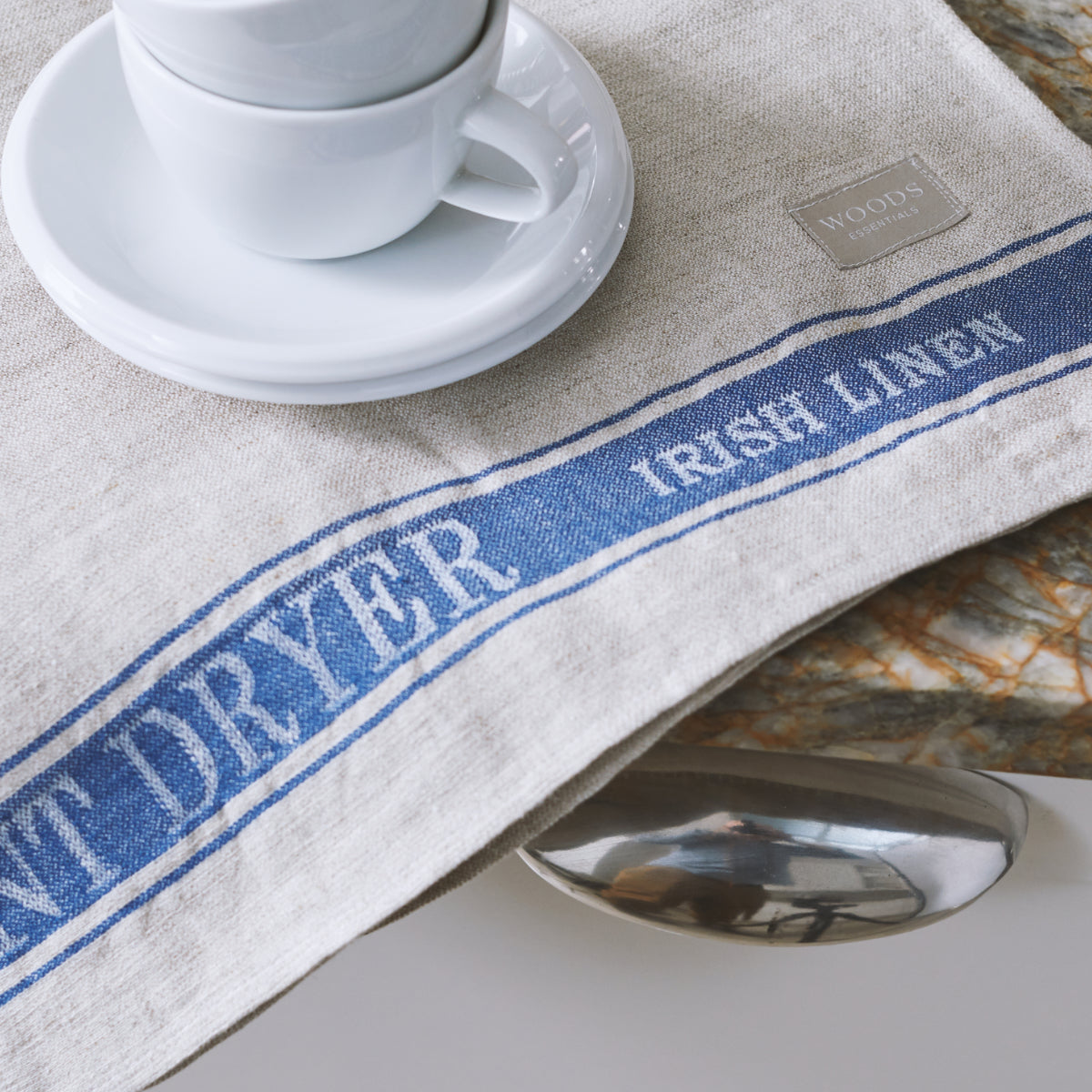
Irish linen polishes glass better than fluffy cotton
-
A good dishcloth should rinse clean and dry quickly
-
Size matters more than people expect
The drawer test
A useful way to buy well is to picture the kitchen drawer you reach for every day, not the one filled with spares. The pieces you rely on should be easy to grab, easy to rotate, and genuinely good to use.
A calm, practical foundation tends to be:
-
Six tea towels
-
Two polishing cloths
-
Two dishcloths
-
One or two oven gloves
That gives you enough to stay fresh without turning kitchen linen into a laundry project.
Tea towels that do the job
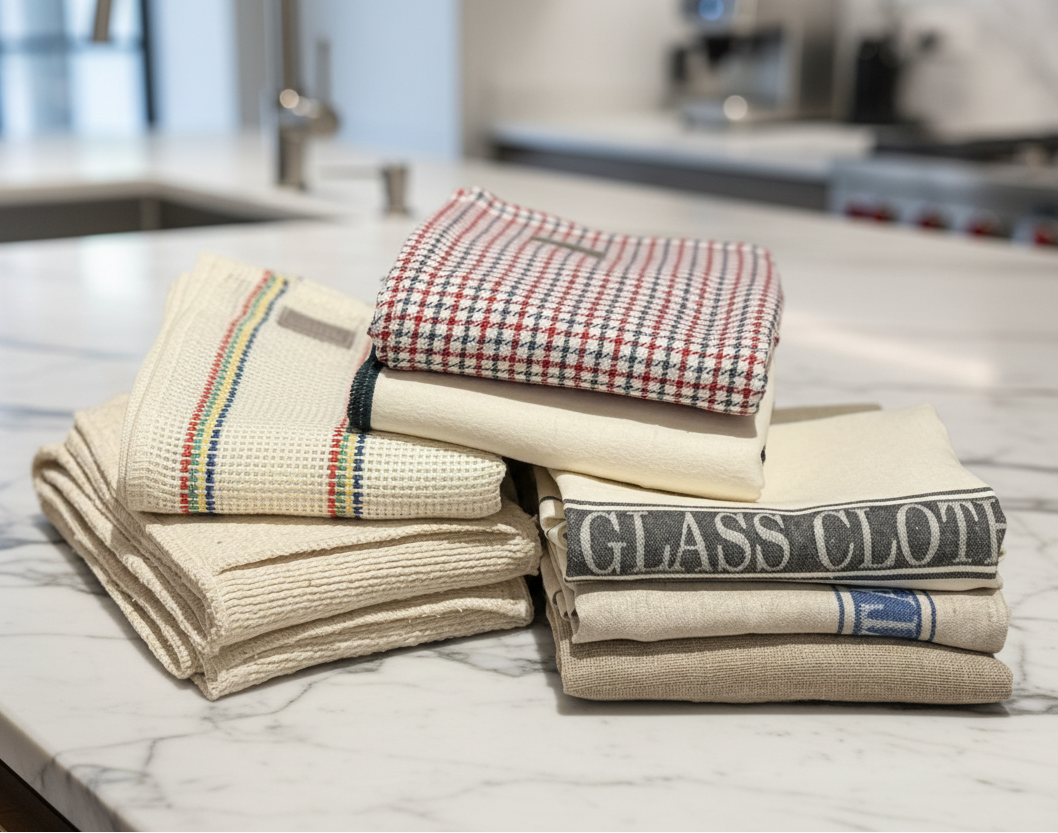
Tea towels are the workhorses. They dry dishes, protect hands, cover proving dough, and make the kitchen feel finished when they hang neatly beside the sink.
Absorbency matters, but drying speed matters just as much. If a towel feels thick but stays damp for hours, it often ends up smelling tired long before it looks worn out.
A simple rule: if you dry a couple of glasses and the towel already feels wet, it is not doing its job properly.
For everyday drying and polishing, our tea towels and glass cloths cover most kitchens beautifully.

Irish linen or cotton: a simple way to choose
Both can be excellent, but they behave differently. The easiest way to choose is to think about what you do most often.
Irish linen tends to suit you if you want:
-
Faster drying
-
A crisp feel that stays smart
-
Minimal fluff on glassware
-
Strong fibres built for repeat washing
Cotton tends to suit you if you want:
-
A softer hand feel
-
Everyday comfort
-
A slightly heavier, more cushioned feel
Many people end up using both. Linen for glassware and polishing. Cotton for hands, spills, and general drying.
Bigger than standard: why size matters
Tea towels are often bought without checking dimensions, which is why they can feel oddly ineffective in daily use.
A more generous towel dries more quickly because you are not saturating the same small patch of fabric. It also works better for larger pans, serving dishes, and glassware.
Woods tea towels are typically larger than standard, which makes them more useful in real kitchens. You notice it immediately when you start drying properly instead of chasing moisture around the plate.
Glassware that looks professionally polished
There is a particular satisfaction to glassware that looks genuinely clean. No lint. No haze. No smears that only appear when sunlight hits the glass.
A polishing cloth should feel smooth and firm, not fluffy. It should glide across glass rather than grabbing it.
If your glassware looks fine until the light catches it, the cloth is usually the issue, not your washing up.
This is exactly why tea towels and glass cloths earn their place, even in a kitchen that already has plenty of towels.

Dishcloths: what “proper” actually means
A dishcloth should clean well, rinse easily, dry quickly, and avoid holding onto smells.
The mistake is buying cloths that feel soft for five minutes, then turn limp and sour by day two. That softness often comes from cheap fibres and finishes that collapse quickly with use.
The cloth that earns its place is the one you can use hard, wash frequently, and still reach for without hesitation.
Many households end up preferring our 100% linen dishcloths because linen stays strong, dries well, and avoids the lingering greasy smell that ruins cheaper cloths.

Longevity: the part nobody advertises
Cheap kitchen linen has a predictable lifecycle. It looks fine, then it starts shedding, stops absorbing properly, and ends up replaced.
Good linen and well-made cotton last because they are built for repeat washing. They hold their shape, keep their texture, and stay useful instead of slowly turning into clutter.
This is where better kitchen linen becomes practical, not indulgent. Fewer replacements. Fewer disappointments. Better results every day.
Oven gloves: the luxury is confidence
Oven gloves shape how relaxed cooking feels. A glove that is too thin makes you tense. A glove that is too bulky makes you clumsy.
The right pair is protective but still easy to grip with. You should be able to lift a hot tray without hesitation, and set it down without fumbling.
If you want oven gloves that feel reliable without being awkward to use, browse our oven gloves and mitts.

How many should you own?
There is a point where extra kitchen linen stops being useful and starts becoming a pile you avoid.
A calm setup tends to be:
-
Six tea towels
-
Two polishing cloths
-
Two dishcloths
-
One or two oven gloves
That gives you rotation, freshness, and a kitchen that stays tidy without effort.
Care: how to keep kitchen linen fresh
The fastest way to ruin good kitchen linen is to let it sit damp. The second fastest is too much product.
A good routine looks like this:
-
Hang towels fully open to dry between uses
-
Wash more often than you think you need to
-
Avoid heavy softener if you want good absorbency
-
Dry thoroughly before storing
Most “wearing out” is actually build-up, not age.
Common mistakes that make kitchen linen disappointing
Most frustration comes from a few small mistakes that are easy to fix once you notice them.
-
Using fluffy towels on glassware
-
Expecting one cloth to do everything
-
Leaving damp linen bunched by the sink
-
Using too much product so towels stop absorbing properly
Fix these and the kitchen starts to feel easier almost immediately.
The everyday upgrade you feel instantly
When kitchen linen is right, the kitchen stops feeling like something you have to manage. The small jobs become quicker. Surfaces stay cleaner. Glassware comes up bright. Everything looks more orderly because nothing is permanently damp or slightly messy.
Good kitchen linen does not feel like a purchase. It feels like the kitchen running properly.
in Conclusion
Kitchen linen is one of the simplest upgrades you can make, because you use it constantly. When towels dry properly, cloths rinse clean, and everything hangs neatly, the whole kitchen feels more under control. Small jobs take less effort, and the room stays cleaner without you constantly chasing it.
Join the Heritage Partnership and build that ease into your daily routine. You will be first to see new arrivals, but you will also get guidance on the details that genuinely matter, such as choosing Irish linen for lint-free glassware, keeping tea towels fresh without losing absorbency, and creating a practical rotation that suits how you actually cook and clean. We will help you choose the right balance of tea towels, polishing cloths and dishcloths, so you always have a dry one to hand and nothing sits damp by the sink. You will also get simple care advice that protects longevity, because the best kitchen linens are the ones that stay crisp, capable, and reliable wash after wash. When these basics are right, the kitchen feels calmer, cleaner, and far more pleasant to live in every day.