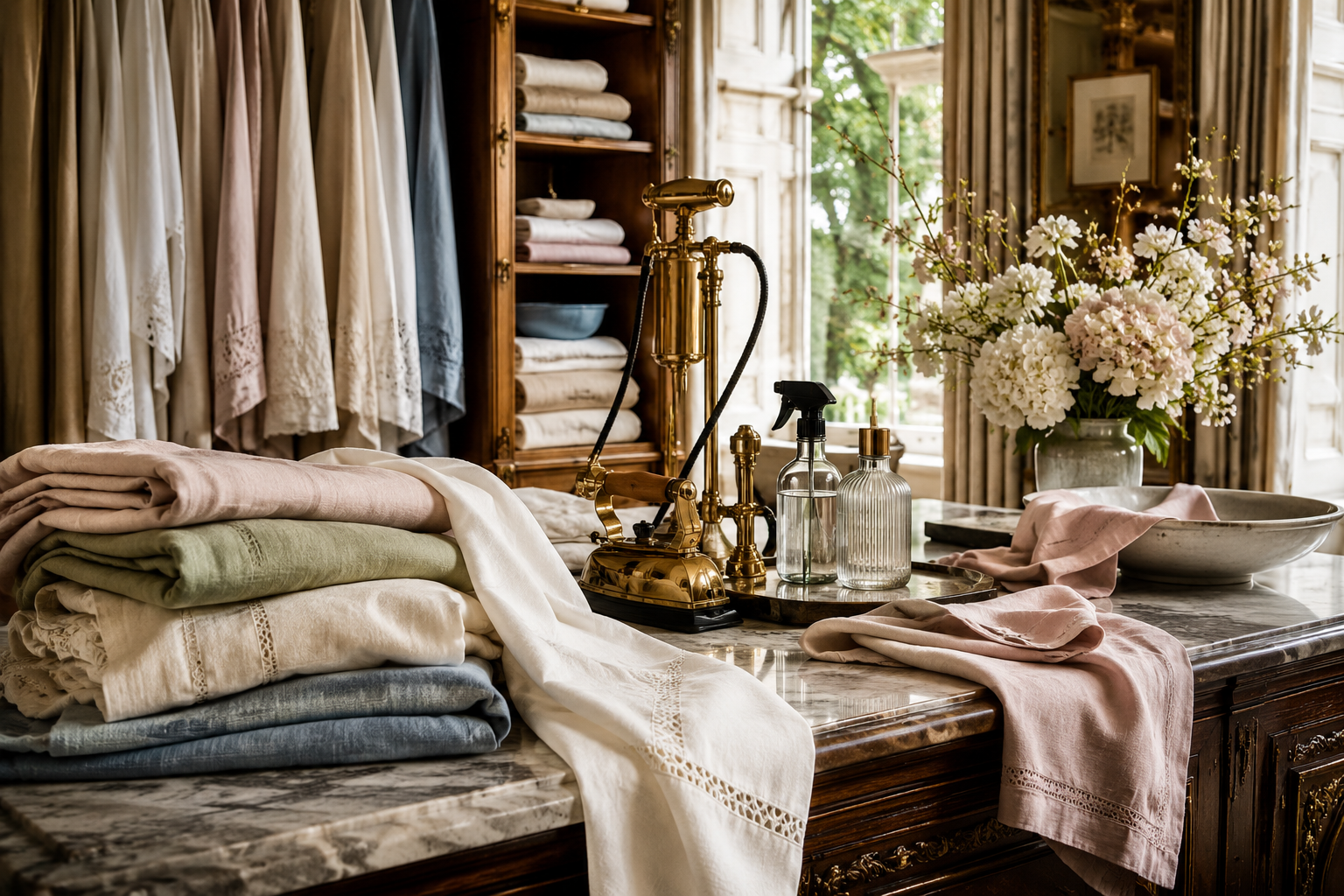
Taking Care Of Your Luxury Linen
Luxury linen rewards the small effort of caring for it properly with decades of life. A good Egyptian cotton duvet cover bought today and treated well can still feel beautiful years from now. The same cover thrown into hot washes with the wrong detergent will lose softness and strength far sooner. This guide covers the care of every type of fine linen we sell, from bed linen and towels to table linen, kitchen linen and specialist fabrics.

Egyptian Cotton Care
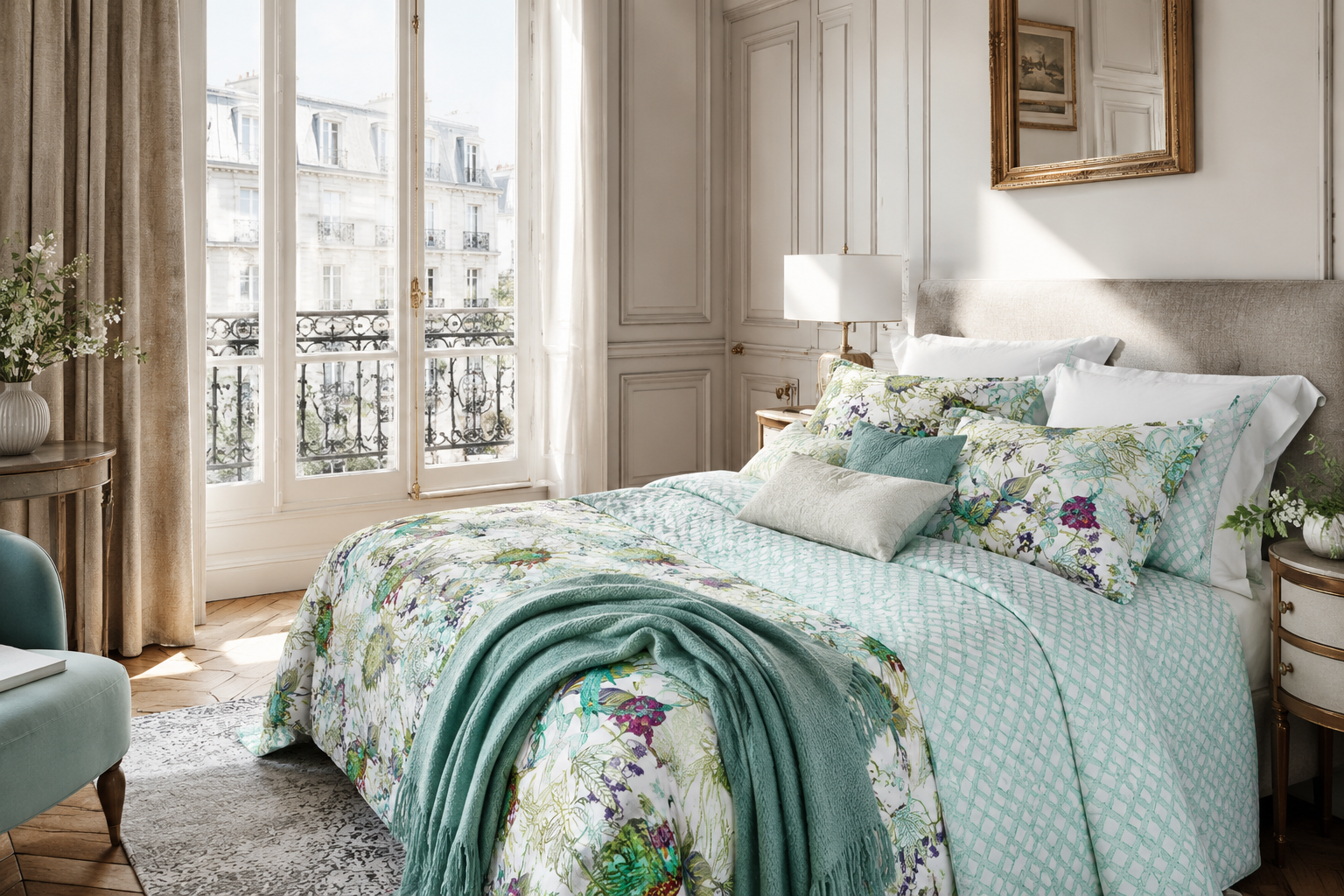
Egyptian cotton is one of the most forgiving luxury fabrics, which is why we recommend it as an everyday choice for sheets, duvet covers and pillowcases. Wash at 40°C with a measured dose of non-biological detergent. Too much detergent leaves residue that dulls the fabric and can shorten its life. Skip fabric softener entirely, as it coats the fibres and reduces natural softness.
Tumble dry on low or, if line drying, keep the fabric out of direct sunlight. Iron Egyptian cotton while still slightly damp for the crispest finish, working on the reverse side first.
For more detailed guidance on washing temperatures and detergent choice, read our bio vs non-bio detergent guide. To browse the full range, visit our Egyptian cotton bed linen collection, and for English-woven percale at its finest, explore the Peter Reed collection.
Linen Care
Pure linen behaves differently from cotton and benefits from a gentler routine. Wash at 30°C to 40°C, as very high temperatures can cause uneven shrinkage and affect the drape. Linen is naturally crease-prone, and that is part of its character. If you prefer a crisper finish, iron while damp on the reverse side.
For tablecloths and napkins, hang to dry rather than tumble dry where possible. This helps maintain a clean, elegant fall across the table. Linen also improves with age, becoming softer and more supple after repeated washing. Our linen softening timeline guide explains what to expect from the first night through to years of use.
Flannelette Care
Flannelette is brushed cotton, which means the surface fibres are raised to create its soft, warm handle. Those raised fibres need a slightly different approach. Wash at 40°C, then tumble dry on low to help re-fluff the brushed surface. Air drying alone can leave flannelette feeling flatter.
Avoid fabric softener, which coats the brushed fibres and reduces their loft. With proper care, a quality flannelette set will stay warm, soft and comforting through many winters. For the current range, see our flannelette bed linen set.
Silk Care
Silk is one of the most delicate luxury fabrics, so it needs a strict routine. Hand wash in cool water with a silk-specific detergent, or use a delicates bag on the silk cycle of a modern machine. Never use a standard wash cycle.
Do not tumble dry silk. Hang it in the shade and iron only on the reverse side, using the lowest silk setting while the fabric is still slightly damp. For silk pillowcases and sheets, washing every two weeks rather than weekly can help extend the life of the fabric. For a wider comparison of delicate luxury fibres, read our guide to linen vs silk.
Towel Care
Towels live in the most demanding environment of any household linen. They are used daily, exposed to moisture and washed often. The wrong care can turn a plush Egyptian cotton towel into something stiff and tired within a year.
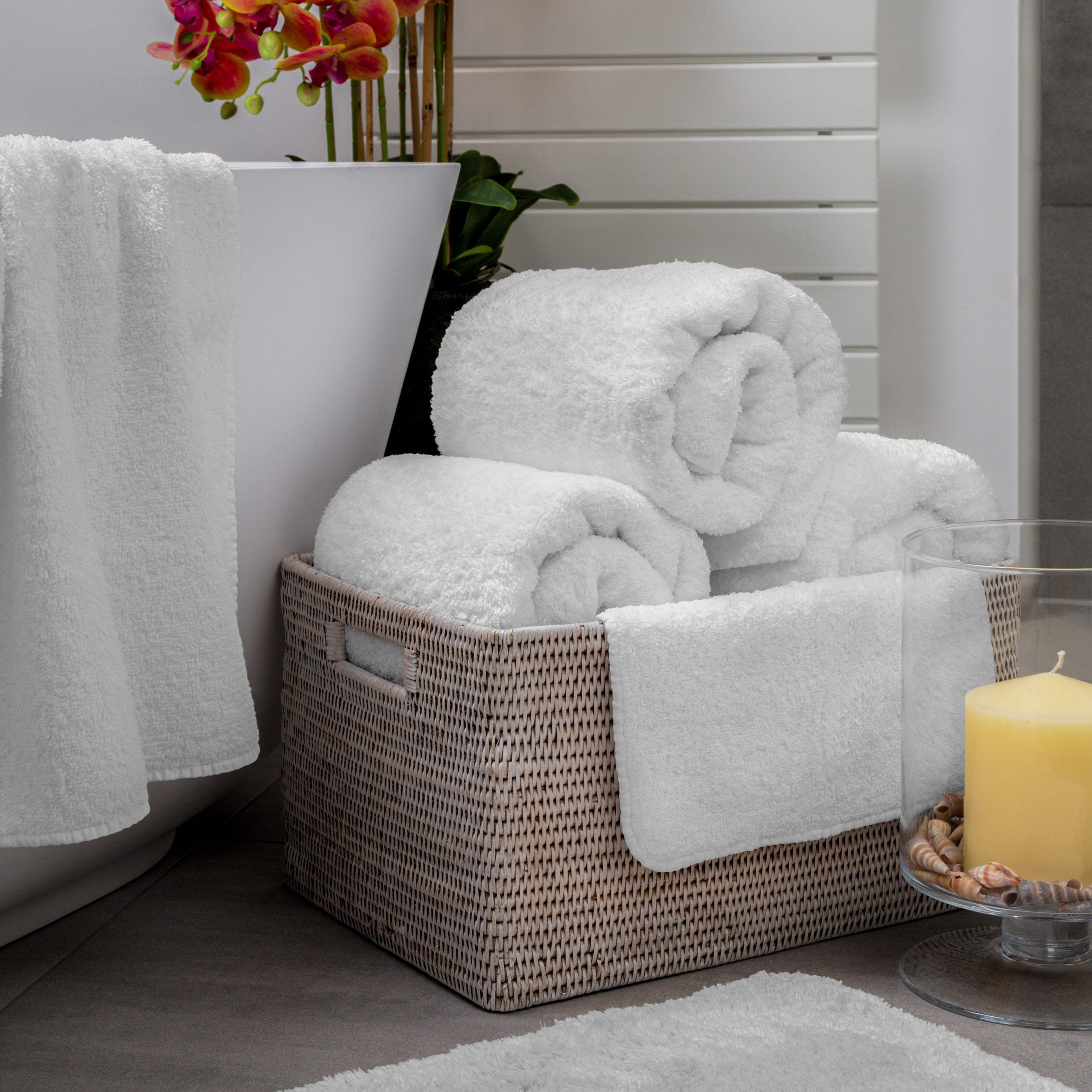
Wash towels at 40°C with a moderate dose of detergent. One occasional 60°C wash can help refresh white towels, provided the care label allows it. Never use fabric softener on luxury towels, as it coats the cotton loops and damages absorbency. Tumble drying on low is actually useful for towels because it fluffs the loops and restores loft. Line drying alone can sometimes leave towels feeling rough.
Air towels between uses by hanging them spread out rather than folded. A folded damp towel can develop a musty smell quickly. Our Egyptian cotton towel guide explains towel weight, absorbency and care in more detail.

Table Linen Care
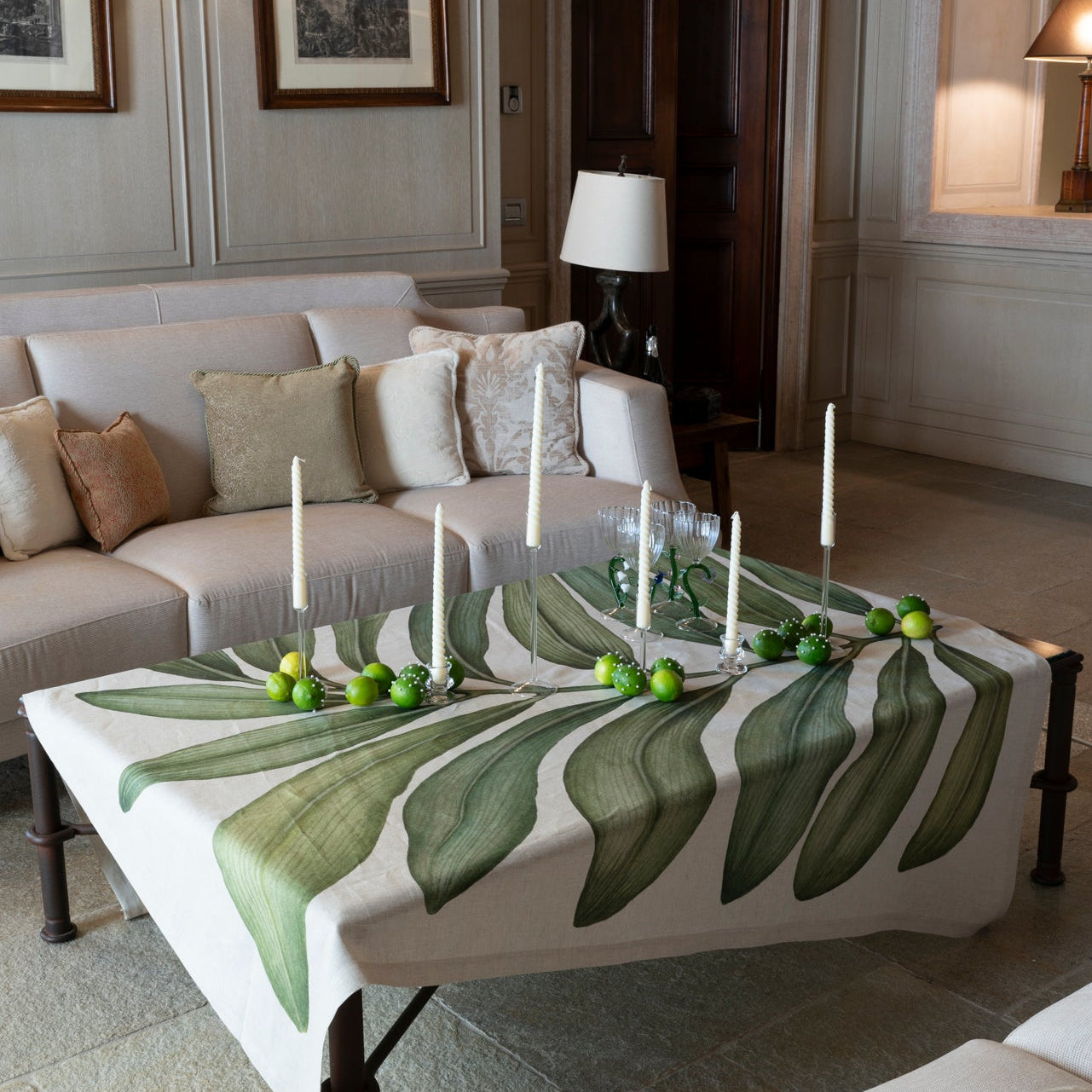
Fine table linen deserves the same attention as bed linen, especially when used for formal dining. Treat spills quickly, particularly red wine, coffee, oil, gravy and candle wax. Blot rather than rub, then rinse the mark with cool water before washing.
Cotton and linen tablecloths usually wash well at 40°C, although heavily stained white cotton may tolerate a warmer wash if the care label allows it. Napkins should be washed soon after use, as food oils can settle into the fibres if left too long. Hang larger tablecloths to dry where possible, then iron while slightly damp for the cleanest drape.
For choosing and caring for formal dining fabrics, read our guide to the perfect table linen, or browse our table linen collection.
Kitchen Linen Care
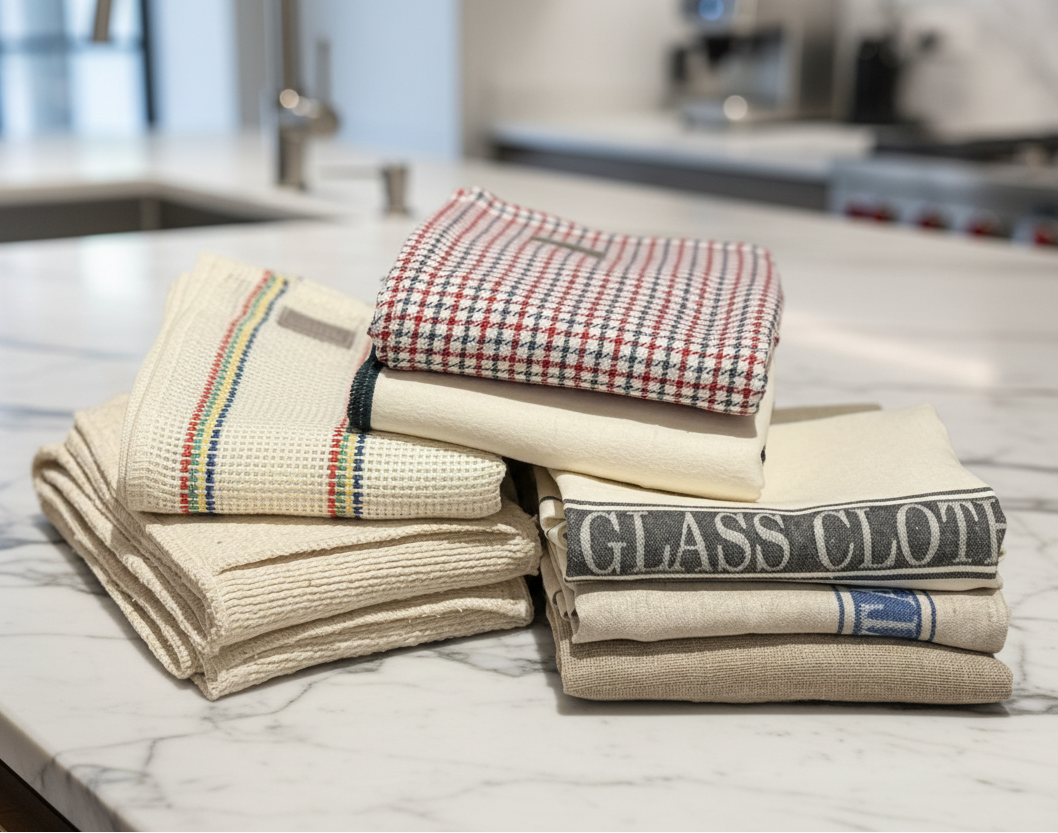
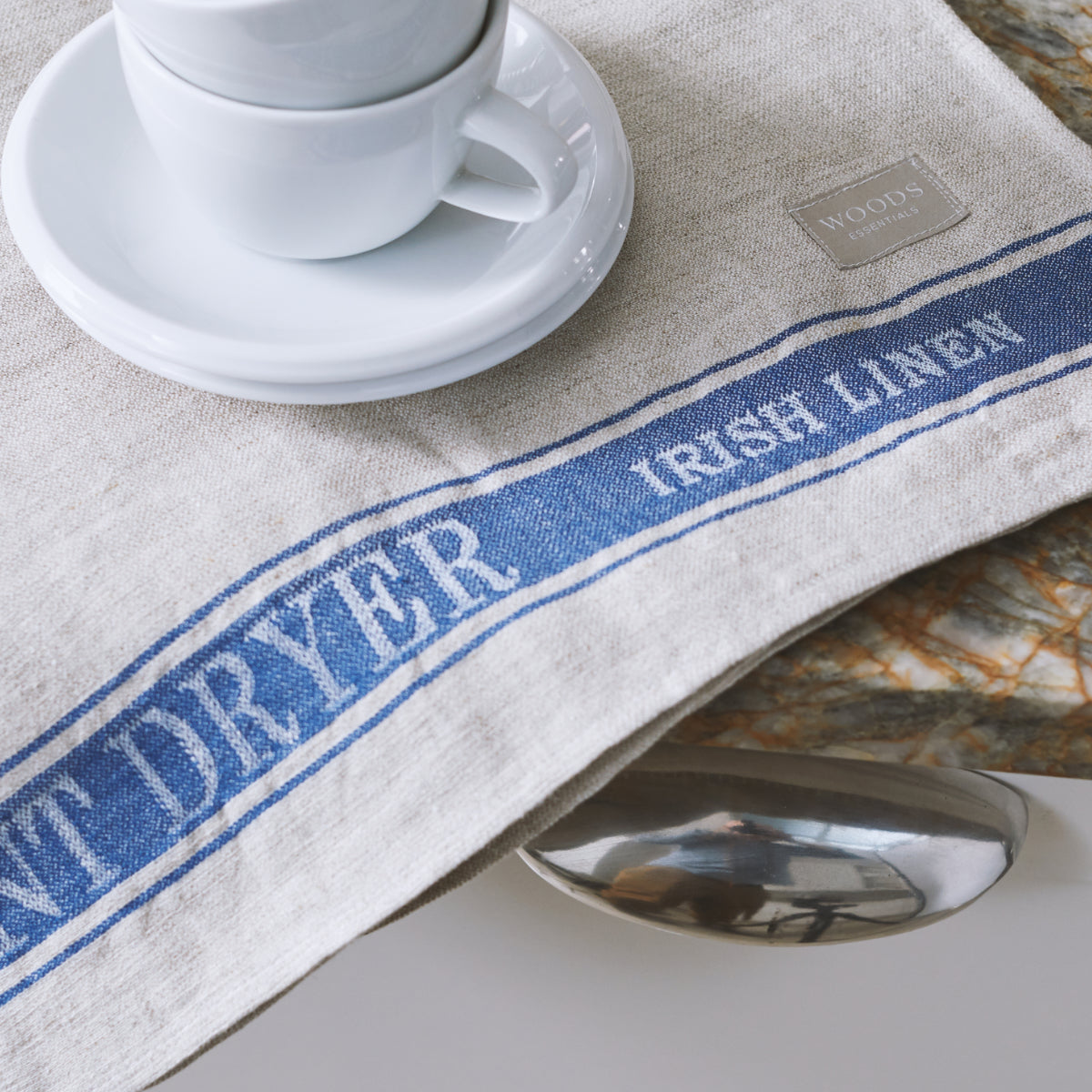
Kitchen linen works harder than almost any other fabric in the home. Tea towels, glass cloths, oven gloves and kitchen hand towels deal with moisture, food, grease and frequent washing.
Wash tea towels and kitchen cloths separately from bed linen and towels. A 40°C wash is usually enough for normal use, while occasional hotter washes may be suitable for hygiene if the care label allows. Avoid fabric softener on glass cloths because it can reduce absorbency and leave streaks on glassware.
Dry kitchen linen thoroughly before storing. Damp folded cloths quickly develop odours. For more practical advice, read our guide to kitchen linen essentials.
Dressing Gown Care
Luxury dressing gowns need care according to fibre type. Towelling robes can usually be washed like towels, with no fabric softener and a low tumble dry to restore softness. Cotton robes should be washed gently and dried carefully to protect shape. Silk dressing gowns should be dry cleaned or washed only according to the care label.
For more detailed guidance, read our specialist guide to caring for luxury dressing gowns.
Blankets, Throws and Bedspreads
Blankets, throws and bedspreads need less frequent washing than sheets and towels, but they still benefit from regular care. Shake them out weekly, air them over a bannister or clothes horse, and keep them away from long periods of direct sunlight.
Wool blankets should be aired often and washed only when necessary, using a wool cycle or specialist cleaning method according to the label. Cotton blankets are usually easier to launder, but they should still be washed gently to protect their shape. Bedspreads should be brushed or shaken regularly to remove dust, then cleaned according to fibre type.
For breathable layering throughout the year, explore our blankets collection and bedspreads.
Care Labels and Crease Management
Care labels should always be your first check, especially with specialist fabrics, embroidered pieces, coloured borders and mixed fibre blends. Luxury linen is often more robust than people expect, but it dislikes careless washing. Separate whites from colours, avoid overloaded machines and treat stains before washing rather than relying on a hotter cycle.
Creasing is part of the character of natural fibres. Cotton can be pressed to a crisp hotel finish, linen looks best when gently relaxed rather than perfectly flat, and sateen should be handled with care to protect its smoother surface. For the easiest finish, remove sheets, pillowcases and table linen from the machine promptly, shake them out, smooth the seams by hand and dry them as flat as possible.
For a broader care overview, see our bedding care masterclass.
Storage That Preserves Luxury Linen
Good storage is part of good linen care. Always store linen completely dry, folded loosely and away from strong sunlight. Avoid plastic bags for long-term storage because they can trap moisture and encourage yellowing. Breathable cotton storage bags are better for duvets, blankets, heirloom tablecloths and seasonal pieces.
Cedar blocks or lavender sachets can help deter moths, especially around wool, cashmere and silk. Do not overfill cupboards. Linen needs a little air around it to stay fresh, particularly in older homes where humidity can vary through the year.

Caring for Fine Linen Over Time
The finest linens are not just bought for the moment. They are chosen to become part of daily life, softening into the rhythm of the home with every wash, fold and use. A well-kept sheet, towel, tablecloth or blanket carries its quality quietly, holding its shape, comfort and beauty through the seasons. The difference is rarely complicated. It comes from washing with care, drying without harshness, storing pieces properly and giving natural fibres the respect they deserve.
For those who appreciate fine fabrics, thoughtful design and the quiet details that make a home feel beautifully cared for, the Heritage Partnership offers a more personal way to stay in touch with Woods. Join for first looks at new collections, selected previews and seasonal inspiration shaped around comfort, craftsmanship and elegant living.