
How To Choose The Best Cotton Sheets
To choose the best cotton sheets, start with how they will look in your bedroom, then ignore the thread count headline and judge the quality of the cotton itself. Decide whether you prefer crisp percale or silky sateen, and buy from a reputable maker. Those are my father's five points, in his order.
- William Woods' five things to consider are design and colour, thread count, the quality of the sheeting, percale or sateen, and a reputable maker.
- Egyptian cotton is not a guarantee of quality on its own, because there is good Egyptian cotton and poor Egyptian cotton.
- Percale has a crisp feel and, in my father's definition, a thread count of 180 threads per square inch or over.
- Sateen has a silkier feel, and in my father's words, Woods sells an equal number of percale and sateen.
- The Graziano Hemstitch, Graziano Notre Dame and Sorano Superfine are 600 thread count percale; the Murano, Aquileia, Udine and San Danielle are 300 thread count sateen, all made in Italy.
- The Woods family has been associated with fine linen since 1733, and our Harrogate shop has traded since 1895.
Where do these five points come from?
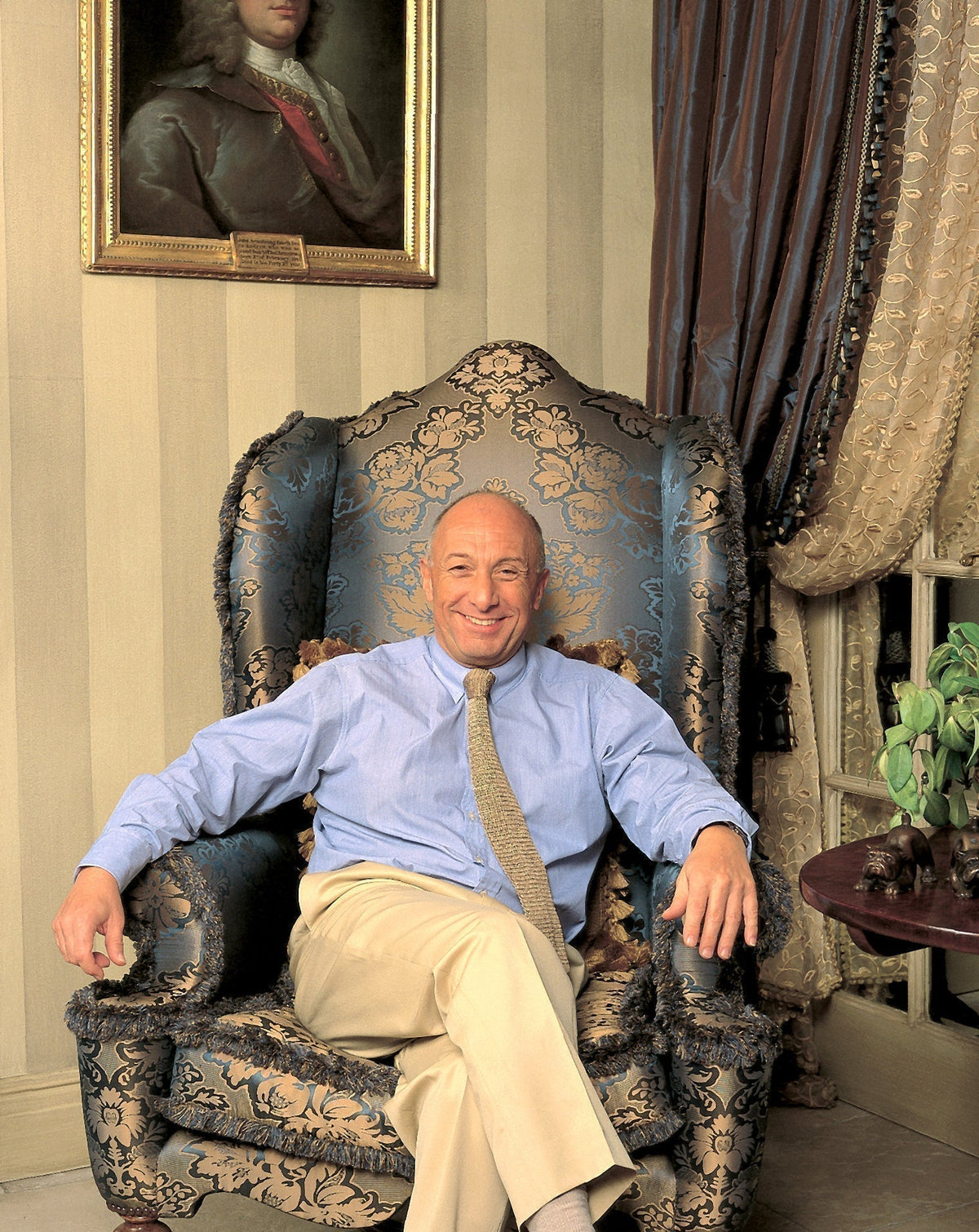
I am Jonathan Woods, and the advice on this page is my father William's. He set it out in a video that has become our best performing content in any format, and until now it has never been written down. He introduces it like this:
"There are five simple things for you to consider when buying bed linen, which I hope you find helpful. The Woods family now have been associated for nearly 300 years with fine linen."
What follows are his five points, in his order, with a short note on each.
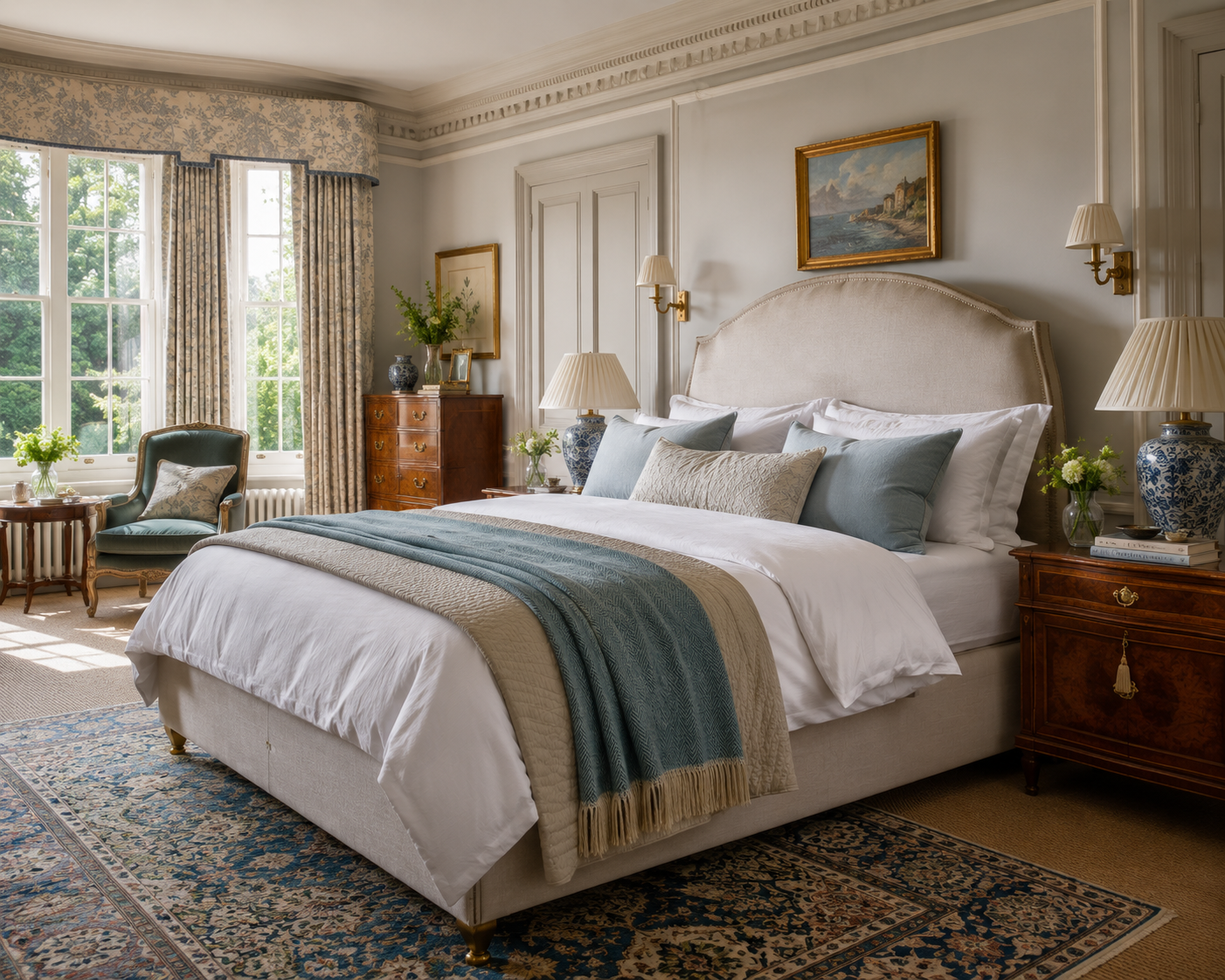
Will they suit your bedroom?
It is the first thing he mentions, and he says it as an interior designer:
"Well, as an interior designer for longer than I care to mention, obviously the design and the colour and how it fits in to your colour scheme in the bedroom is very, very important."
Sheets are on show every day, so think about the walls, the headboard and the bedspread before you think about the cloth.
Does thread count matter?
Far less than the packet suggests. My father puts it plainly:
"I beg of you, please, please, do not be sucked into thread counts."
A higher number is no guarantee of a better sheet, and my father explains how the figure can be inflated in Does Thread Count? The Truth by William Woods. When you look at a sheet, read the number last.
How good is the cotton itself?
Egyptian cotton is the name people look for, and it is a good one, but the name alone settles nothing:
"So even choosing Egyptian cotton isn't necessarily a measure of a good quality sheet. But you actually find good quality Egyptian cotton, poor quality Egyptian cotton, but do ask for good quality Egyptian cotton sheeting."
The useful question is not whether a sheet is Egyptian cotton but whether it is good Egyptian cotton, and a retailer who knows their cloth should be able to tell you. There is more on this in Egyptian Cotton Bedding: Why The Label Guarantees Nothing.
Should you choose percale or sateen?
This is the choice that decides how the bed feels, and my father describes both. First percale, which is his own preference:
"...percale, which has a nice crisp feel to it, which is basically a thread count of 180 threads per square inch or over, has a lovely feel, and that's my personal choice."
Then sateen:
"Otherwise, you might choose cotton sateen. You can still have Egyptian cotton sateen. But that tends to be a much silkier feel to the sheet which many people prefer. We sell an equal number of both."
Percale suits anyone who likes a crisp bed; sateen suits anyone who wants something smoother against the skin. In our range, the Graziano Hemstitch, Graziano Notre Dame and Sorano Superfine are 600 thread count percale, while the Murano, Aquileia, Udine and San Danielle are 300 thread count sateen, all made in Italy. For a closer comparison, read Percale or Sateen? We Sell an Equal Number of Both.
Who should you buy from?
His last point is about the maker:
"...do choose a reputable company. You know, people like Pratesi or Frette or Peter Reed, then you're guaranteed to have something that is very well made."
Pratesi, Frette and Peter Reed all sit in our bed linen collection alongside our own Woods ranges, so you can compare them in one place.
Five points, then: the room, the number, the cotton, the weave and the maker. Get those right and you will have sheets you are glad to get into for years. New bed linen is announced first to members of the Heritage Partnership, our mailing list.