




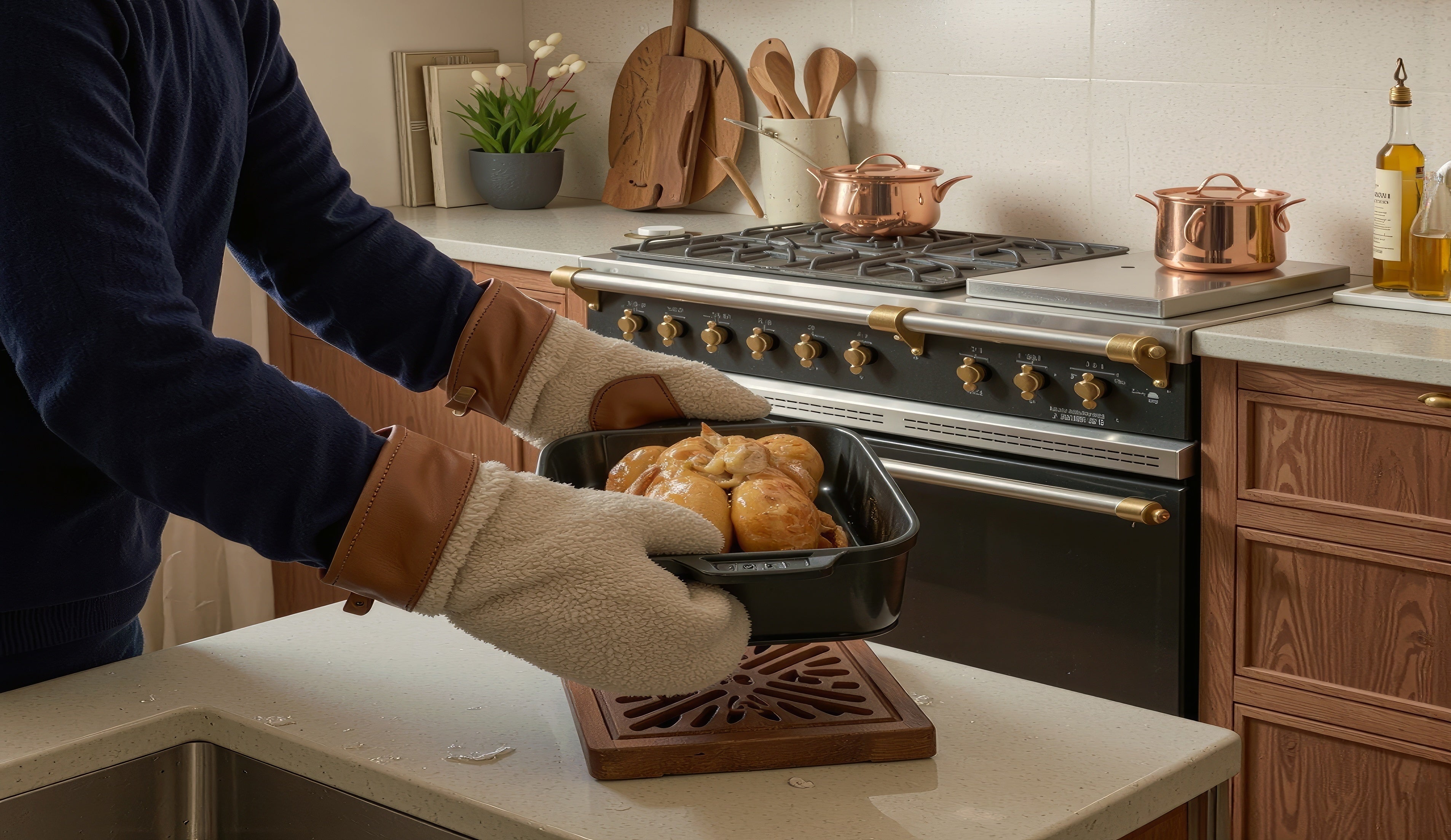
How to Handle Heavy Roasting Tins Safely with Oven Gloves
The tin is heavier than you expected. It always is. And the oven door is in the way, and the landing spot is two steps further than it should be, and your hands are doing the thinking before your head has caught up. That is the moment oven gloves are actually for. Not the light stuff. This. If yours have been chosen for how they look on the rail rather than what they can do under load, the oven gloves, cloths and mitts collection is the right place to start over.

You reach for a glove and it feels secure. What is actually doing that?
Three things. Grip, so the handle does not shift in your hand. Coverage, so the wrist is protected during the reach in. Predictability, so the glove performs consistently every time rather than most of the time. Insulation is the part everyone focuses on. But a glove that insulates poorly and grips well is safer than one that insulates well and slips.
You are choosing between a double glove and two separate mitts. Which one?
For large roasting tins or heavy cast iron, a double glove. Both hands covered in a single piece means the gloves are already coordinated when the load is not. Separate mitts are faster for small, quick tasks. The question is: what is your most difficult lift, and which option makes that lift feel controlled rather than managed.
You have burned a wrist before, but not your palm. Why does that keep happening?
Because wrist burns happen on the reach, not the lift. The angle of pulling a heavy tray forward and out exposes the inside of the wrist at exactly the point where most gloves end. A glove that covers the wrist and lower forearm closes that gap. A glove that stops at the palm does not.
You are about to lift. What should already be in place before you touch the oven?
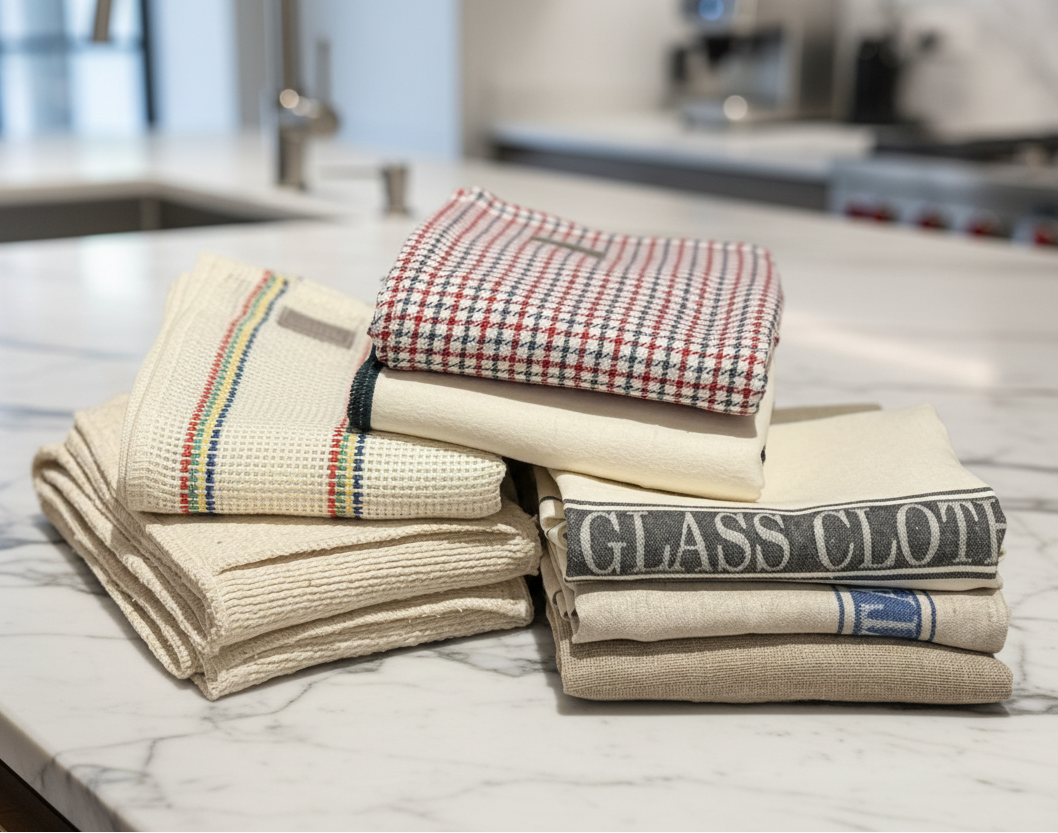
A surface for the dish to land on, positioned close enough that you are not carrying the weight further than necessary. If you have been at the sink, dry your hands before you touch the gloves. Damp hands create a damp glove interior. A damp glove conducts heat instead of blocking it. Keep a kitchen hand towel near the sink and that habit becomes effortless.

You feel heat sooner than you used to. What does that mean?
It means the glove is done. Padding compresses. Fabric thins at grip points. The glove looks fine. It is not fine. This is not a dramatic failure. It is a slow one, and slow failures in kitchen safety tend to go unnoticed until they are not. Replace it before that point.
You are reaching for an oven cloth instead. When is that appropriate?
For lighter dishes and quick handling where a full glove feels like too much. Not for heavy tins, not for deep reaches, not for anything where a slip would be costly. If you are unsure where the line sits, this oven mitts, gloves and cloths comparison guide covers each option by task.

Before the Tray Leaves the Oven
Before your next roasting session, one question is worth asking honestly: if the gloves failed during the lift, would you know in advance? Not dramatically. Just in the quiet way that padding compresses and grip thins without announcement. If you are not completely sure, that uncertainty is worth acting on before it costs you. The kitchen linen range is the right place to look, and the Heritage Partnership offers early access to new additions and practical seasonal guidance.