Flannelette vs Percale vs Sateen: Which Sheets Feel Best in Winter?
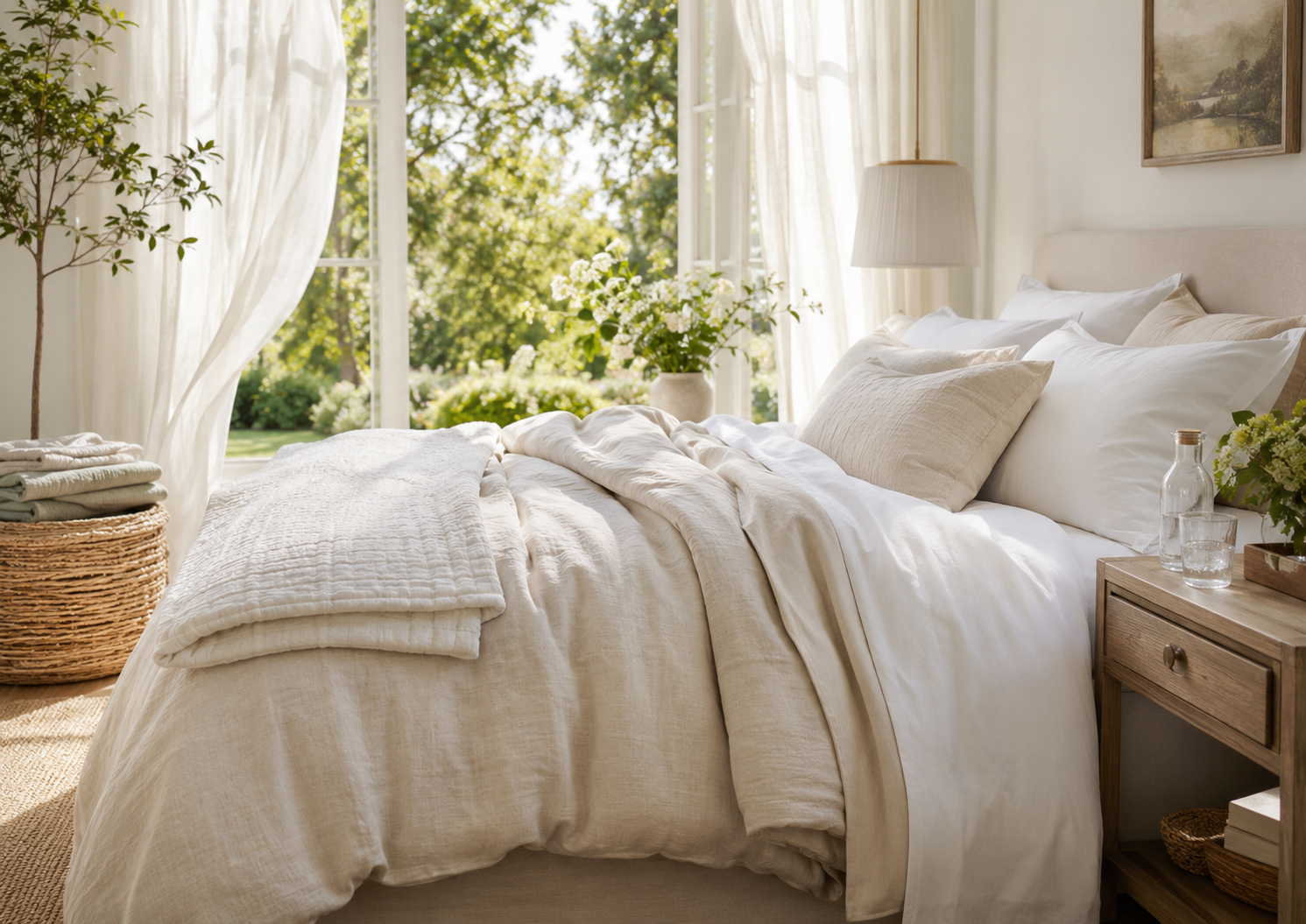
Winter bedding is not a warmth question. It is a contact question. The temperature of the room is something you adjust with a thermostat. The temperature of the sheet when your foot first touches it is something only the fabric can answer. If that first moment is the one that matters to you, flannelette is probably already the right answer, but it is worth understanding why, and where percale and sateen sit, before you choose. The flannelette bed linen collection is worth a look if warmth at first contact is what you are after.

Why flannelette feels warm before your body heat has done anything
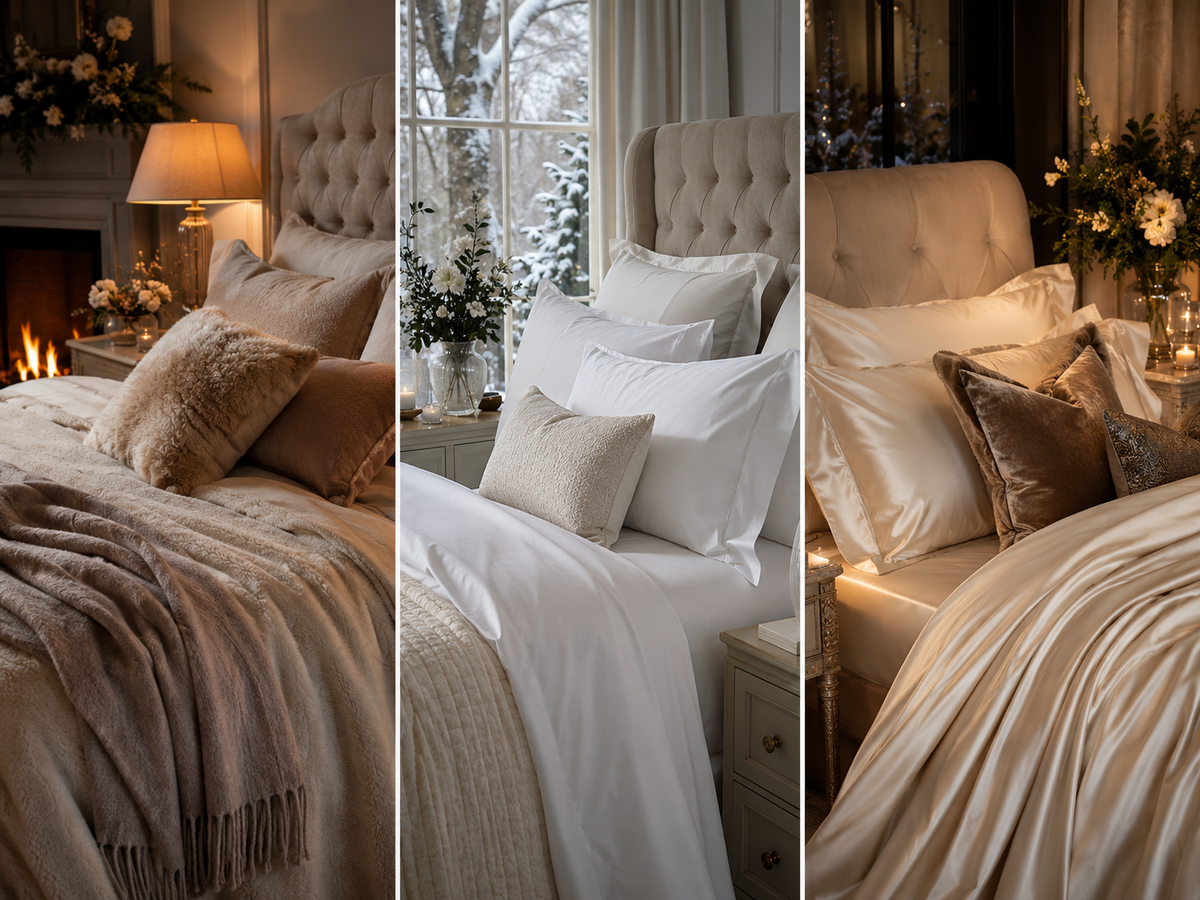
Flannelette is brushed cotton. The brushing process raises a fine pile from the surface of the base weave, and that pile traps a thin layer of still air directly against the skin. Still air is a good insulator. It does not need to be warmed first before it starts working. The result is a fabric that feels warm at contact rather than cool at first and warm later, which is the experience that smooth cotton gives.
And if warmth is the deciding factor, see how flannelette compares with every other way to warm your bed.
Percale: why cool is a feature, not a flaw
Percale is tightly woven and smooth. There is no surface pile to trap air, which means first contact can feel cool in a way that is not a sign of poor quality but a sign of exactly what percale is doing. For people who generate a lot of body heat during the night, or who sleep in rooms that stay warm, that initial coolness is precisely the point. Percale breathes, stays crisp, and does not feel clammy the way some warmer fabrics eventually do.
Where sateen fits
Sateen is smoother and softer than percale, with a slightly silkier surface and a more enveloping feel. It does not have the brushed warmth of flannelette, but it does not have the initial crispness of percale either. It is the option for people who find percale slightly too cool in winter but find flannelette's texture more than they want. A middle position that is quieter and harder to object to.
The one question that tells you which fabric you need
Is it the first minute that bothers you, or the whole night? People who feel the cold at contact, who brace before getting in, who need the bed to feel warm before they relax into it: flannelette. People who sleep warm, kick the covers off, wake feeling too hot: percale or sateen. Most people have always known which category they fall into. They just have not always bought accordingly.
And if warmth is the deciding factor, see how flannelette compares with every other way to warm your bed.
How do you stop winter sheets shifting and losing their shape overnight?
Fit is the quiet factor. A fitted sheet that is too shallow creeps off the corners. One that is too loose folds under a sleeper's weight. Get the mattress depth right first, then build the set around a consistent fit. Browse fitted sheets by depth to find the right match.

The duvet cover is the surface the hands and face register most directly, so while the sheet can be as textured as you like, the cover tends to work best when it is smooth and unfussy. A breathable weave over a brushed base gives the bed warmth without weight. The duvet cover collection has options that work well with flannelette underneath.
Across a full year, the linen cupboard works best when it follows the same logic as a wardrobe: heavier, warmer pieces for the coldest months, lighter smooth cotton for the shoulder seasons and summer. Flannelette for December through February. Percale or a lighter cotton for the rest. The full bed linen range covers every season.

The Moment the Bed Feels Warm
January. Half past eleven. The heating off for an hour. You slide into bed and the sheet is already warm. That is flannelette doing what it does, quietly, every night, without being thought about. If you want seasonal bedding guidance chosen with that same standard of calm reliability, the Heritage Partnership is where that conversation happens.