Your Placemats Don’t Match Your Table Linen? Good. Here’s Why That Works Better.
The tables that look best never match exactly. The tablecloth is one tone, the placemats are another, the napkins add a third texture. Nothing clashes, but nothing is identical. It reads as effortless. And there’s actually a straightforward logic behind it.
The mistake most people make is buying table linen in isolation. A tablecloth from one place, placemats from another, napkins as an afterthought. Everything is fine on its own. Together on the table? Something’s off. This guide gives you the rules for mixing and matching, so you can build a table that works every time, from a Tuesday supper to a Saturday dinner party.
Shop our placemat and Coaster Sets
If you are looking to refresh your table, begin with our Yellow Flower placemats and coasters, a cheerful design that brings warmth and colour to everyday dining and looks equally at home on a bare wooden table or layered over a simple neutral tablecloth.
For a more personalised approach, explore our Festival linen placemats and napkins. Available in more than twenty colours, it allows you to introduce a touch of yellow or create a beautifully coordinated palette tailored to your home.
You can also browse our full placemats, coasters and trays collection to discover designs for every style of table setting.

Should Placemats Go on a Tablecloth, a Runner, or a Bare Table?
This is the first question, and the answer changes everything about which placemats work.
On a bare table, placemats carry all the visual weight. They define each place setting, protect the surface, and set the tone. Choose something with enough presence to anchor the look: woven linen, embroidered cotton, or a confident colour. There’s nothing competing with them, so they can be bold.
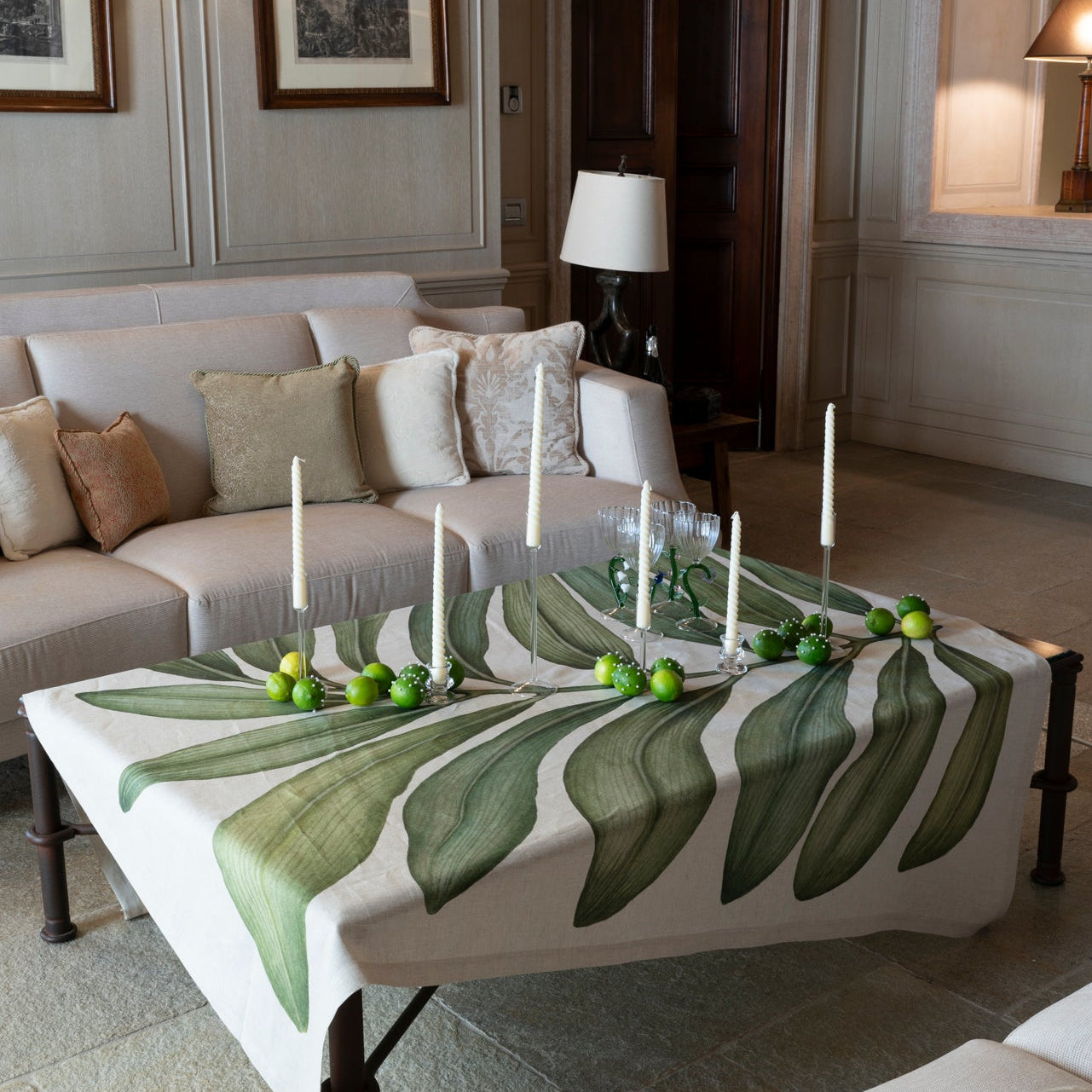
On a tablecloth, placemats become a layer, not the foundation. The tablecloth sets the mood; the placemats add definition on top. A plain white damask cloth paired with textured linen placemats creates depth. A patterned cloth works better with solid, understated placemats that stay quiet.
With a table runner, placemats sit either side and frame each setting. The runner acts as a spine down the centre, and the placemats extend the dressed area outward. This combination is one of the most versatile in table styling. It reads as considered without feeling stiff.
Why Shouldn’t You Match Everything Exactly?
Because it looks flat. Buying the tablecloth, placemats, napkins, and coasters all in the same fabric and colour feels safe, but the result has no depth. The tables that feel most inviting have a mix of textures working together.
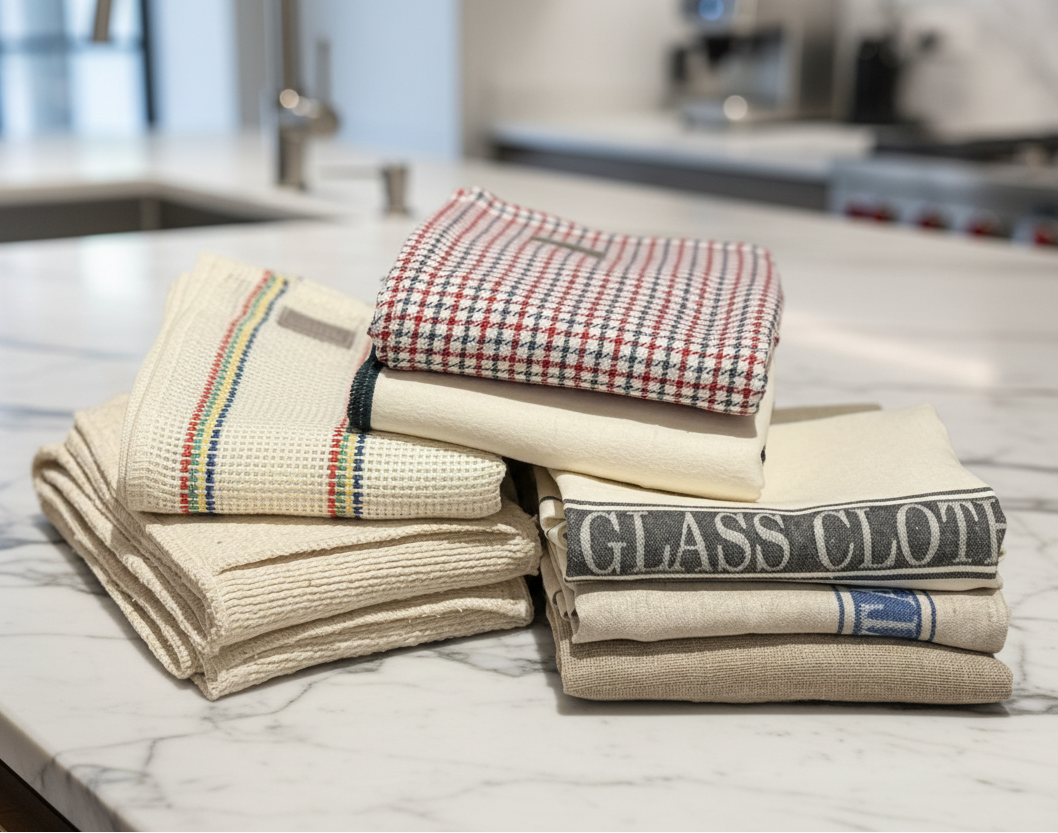
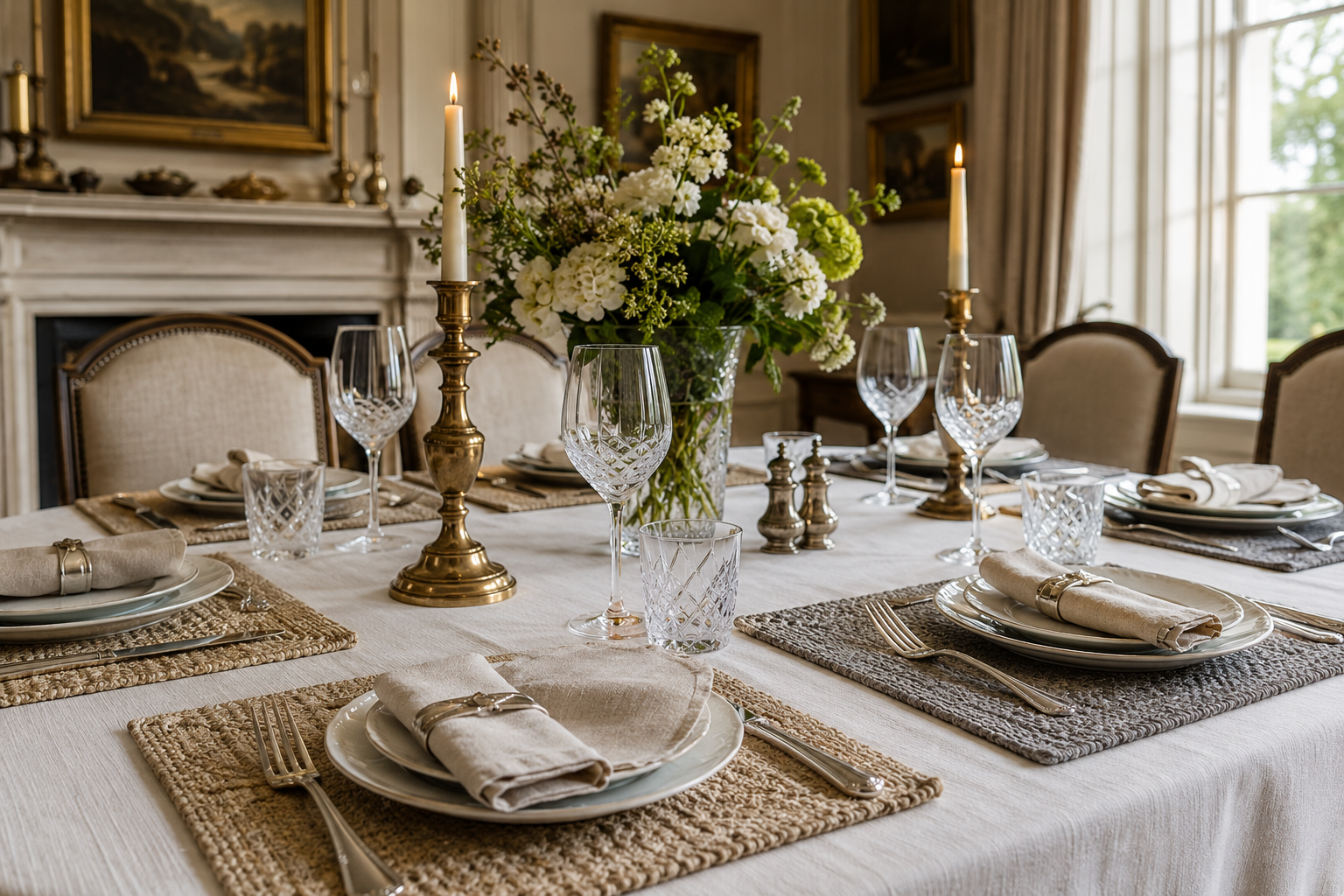
Think smooth versus textured, structured versus soft. A smooth cotton tablecloth with woven linen placemats and coasters. Damask napkins with wooden coasters. An embroidered runner with plain hemstitched placemats. Each pairing tells a different story, but they all work because the textures complement rather than duplicate.
Colour follows the same principle. White with cream with ecru. Tonal variation reads as far more sophisticated than an exact match. If you want a stronger colour, introduce it through one element, typically the napkins or the placemats, and keep everything else neutral.
If yellow is the colour you want to introduce, our yellow flower placemats and coasters do exactly that against a neutral cloth, and the Festival range lets you match napkins and placemats across more than twenty tones.

How Do Coasters Fit Into the Table Setting?
Coasters get treated as an afterthought, but they’re part of the composition. A coaster that clashes with the placemat underneath can unsettle the whole look.
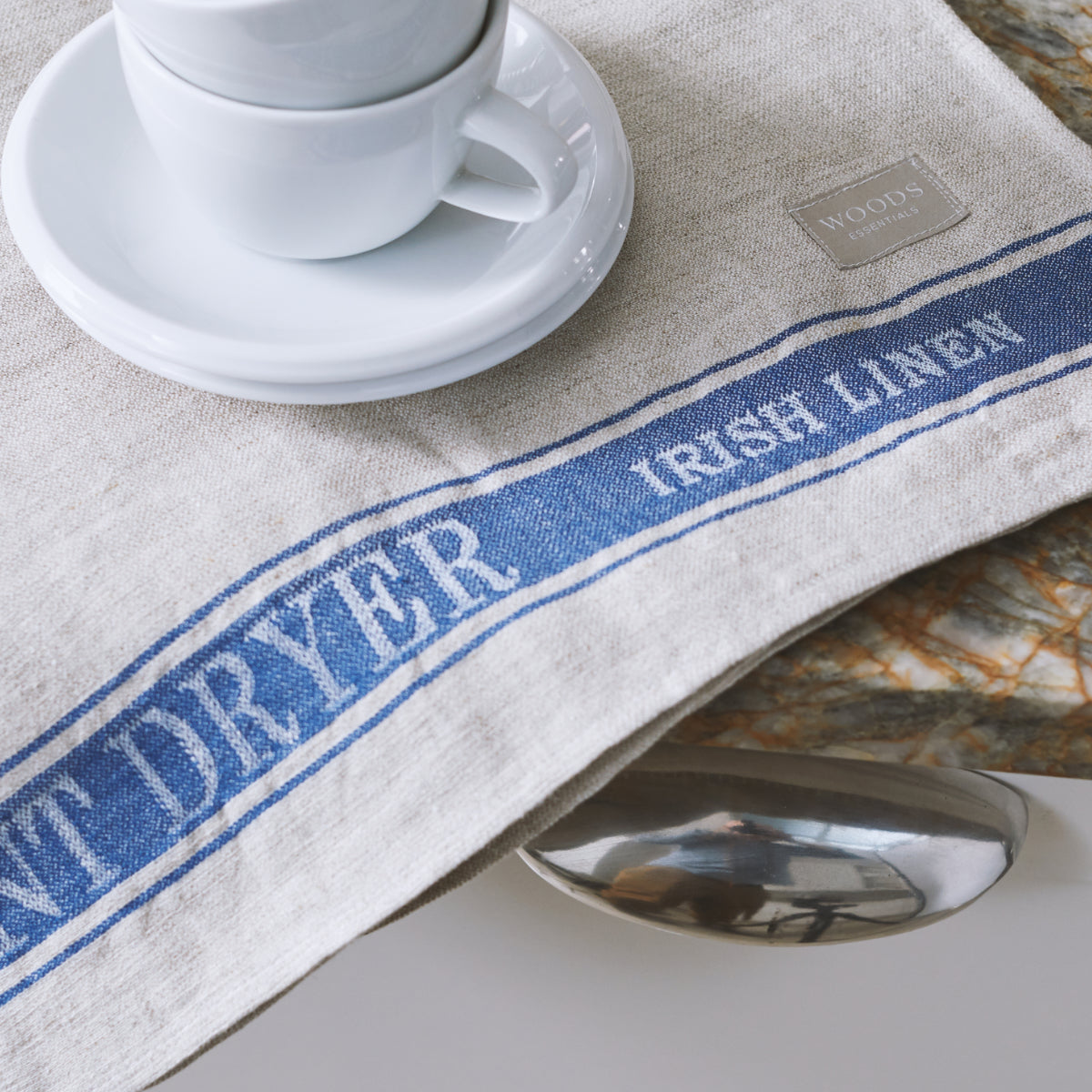
The simplest approach: coasters should either match the material family of your placemats (similar texture, complementary tone) or contrast deliberately by being a completely different material. Cork on linen works. Leather on cotton works. Wood on damask works. In each case, the materials are distinct but feel like they belong together.
A fabric coaster on a fabric placemat usually looks muddled unless the textures are obviously different. When in doubt, go harder material for the coaster, softer for the placemat. The contrast is practical (the coaster protects, the placemat cushions) and visual.
Can the Same Placemats Work for Tuesday Night and Saturday Night?
Yes. This is the real payoff of building a flexible collection. The same set of placemats shifts from casual to formal depending on what’s around them.
Everyday: placemats on a bare table, simple napkins, no cloth. Unfussy, practical. This is where durable, washable placemats earn their keep daily.
Friends over: add a runner, keep the placemats, switch to cloth napkins. The runner lifts the tone half a notch.
Proper dinner: full tablecloth, your best napkins, and coasters for the glasses. The layering signals occasion. This is exactly what the best table linen for hosting does: it scales without starting from scratch.
How Do You Look After Placemats?
Placemats take more daily wear than almost any other table linen. They’re under plates, spilled on, and used far more frequently than a tablecloth.
Fabric placemats should be treated with the same care as your best table linens. Shake crumbs after each use, spot-treat stains quickly, and wash at the temperature the fabric recommends. Iron while slightly damp for the crispest finish on linen and cotton.
Store them flat. Folding creates creases that are hard to remove in thicker materials. If space is tight, rolling loosely inside a drawer beats stacking under heavy items.

What’s the Smartest Way to Build a Placemat Collection?
Start neutral. A set of good-quality placemats and coasters in white, cream, or natural linen will work with almost anything you own. That gives you a foundation for every day and for guests.
Add one element at a time. A tablecloth for bigger occasions. Cloth napkins in a tone that works with the placemats. A runner for the mid-formality sweet spot. Each piece extends what your table can do without anything going to waste. Our Table Linen Buyer’s Guide walks through the full process.
Once the essentials are in, mixing gets fun. Patterned napkins for summer. A darker runner for autumn. Seasonal placemats that swap while the core stays constant. A small, considered collection beats a drawer full of pieces that don’t work together.
The best table settings share something in common: they look like they happened naturally, even when there’s real thought behind them. That’s the difference between matching (which looks safe but flat) and mixing (which looks alive). Once you understand the basic principles of texture contrast, tonal variation, and scaling formality, you can set a table for any occasion with the same core pieces. No waste, no clashing, and no last-minute panic buying before guests arrive.
Ready to shop? Browse our full range of placemats, coasters and trays, or go straight to the Yellow Flower placemats and coasters if that is what brought you here.
For seasonal table styling ideas, new arrivals, and the stories behind the pieces we source, join the Heritage Partnership. It’s where we share the kind of practical detail that helps you get more from every piece of table linen you own, from care tips that keep fabric looking fresh to combination ideas you might not have thought of. If your table matters to you, you’ll find it worth your time.