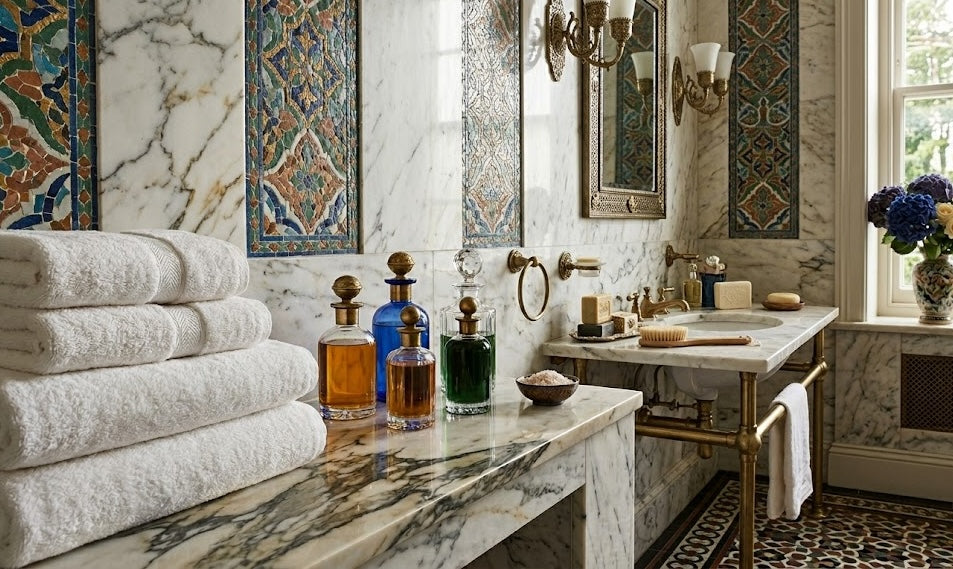
The Complete Guide to Luxury Face Cloths and Flannels
The best luxury face cloths in the UK are made from 600 gsm combed Egyptian cotton, measure roughly 30 by 30 cm, and can last for years if you skip the fabric softener and rotate a stack of six. Everything else in this guide explains why those details matter, how Egyptian cotton compares with muslin and bamboo, and how to spot a face cloth that will still feel plush after a hundred washes.

Why a proper face cloth still matters
The face cloth is the smallest piece of linen in your bathroom, yet it often does the most work. It is the first thing your skin meets in the morning and the last thing it touches at night. A good one lifts away cleanser, removes the day, and lasts for years. A bad one pills, thins, and turns grey within a month.
Skin specialists continue to return to the same recommendation: a soft, absorbent face cloth made from natural fibres, used with warm water, remains one of the gentlest and most effective ways to remove cleanser, balm, and the day’s grime. Cotton lifts oil and product without disrupting the acid mantle, and a fresh cloth every day or two helps keep bacteria away from your face in a way reusable silicone pads never can.
The trouble is that most face cloths sold on the high street are made from short staple cotton, dyed in bulk, and woven loosely to keep the unit cost down. They feel fine in the shop. After ten washes, they go limp, lose their pile, and start shedding lint into your moisturiser. If you want to understand how a properly made cloth differs from a cheap one, our luxury towel buying guide lays out the principles that apply to every piece of bathroom linen, face cloths included.
Egyptian cotton, muslin or bamboo: a side by side comparison
There are really only three contenders worth considering for the bathroom shelf. Here is how they compare:
| Fibre | Softness | Absorbency | Lifespan with daily use |
|---|---|---|---|
| Egyptian cotton | Excellent, plush from first use, and improves with washing | Very high, around 600 gsm | 5 to 10 years |
| Muslin | Light and gauzy, with mild exfoliation | Moderate | 6 to 12 months |
| Bamboo | Very soft and kind to sensitive skin | Moderate, but weaker when wet | 1 to 2 years |
Egyptian cotton is the standard for a reason. Its long staple fibres produce a yarn that is finer, stronger, and softer than ordinary cotton, and it holds its loft through hundreds of washes. It is the best all rounder for daily cleansing, removing balm cleansers, and holding warm against the face to open pores before a shave or a serum. Our deep dive into Egyptian cotton towels: absorbency, weight and care explains exactly why the fibre outperforms ordinary cotton on every measure that matters.
Muslin is the lightweight option. Loosely woven and almost gauzy, it offers a touch of gentle exfoliation and dries in minutes, which is why facialists often favour it for double cleansing. The trade off is durability. Muslin thins quickly and rarely lasts more than a year with daily use.
Bamboo is the newcomer. It is very soft, naturally antibacterial, and kinder to sensitive or reactive skin. It is less absorbent than Egyptian cotton, and the fibre is weaker when wet, so it needs a gentler wash cycle if it is to last.
For most people, in most bathrooms, a stack of well made Egyptian cotton face cloths is the right answer.
Face cloth, flannel or muslin cloth: are they the same thing?
These terms are often used interchangeably, which is part of the reason people end up buying the wrong product. A face cloth and a face flannel are essentially the same thing: a small square of terry cotton, roughly 30 by 30 cm, used for cleansing. “Flannel” is the older British term and is still the more common search phrase, while “face cloth” is what most retailers use today.
A muslin cloth is something different. It is lighter, usually slightly larger at around 30 by 25 cm, often unhemmed, and made from a loose plain weave rather than terry. Muslin is what facialists reach for when they want gentle exfoliation. A terry face flannel is what you reach for on most other mornings of the week.

Size, weight and weave: the details that decide quality
Three details tell you almost everything about a face cloth before you even touch it.
Size. A proper face cloth measures roughly 30 by 30 cm. Anything smaller is really a flannel for travel, while anything bigger is a guest towel pretending to be something else. Thirty centimetres gives you enough fabric to fold into quarters and use a fresh section for each pass.
Weight. Look for 500 to 600 gsm. Anything lighter than 500 can feel thin and may dry the skin out. Anything heavier than 600 can take too long to dry between uses, which is how mildew begins. The sweet spot is plush without feeling like a sponge.
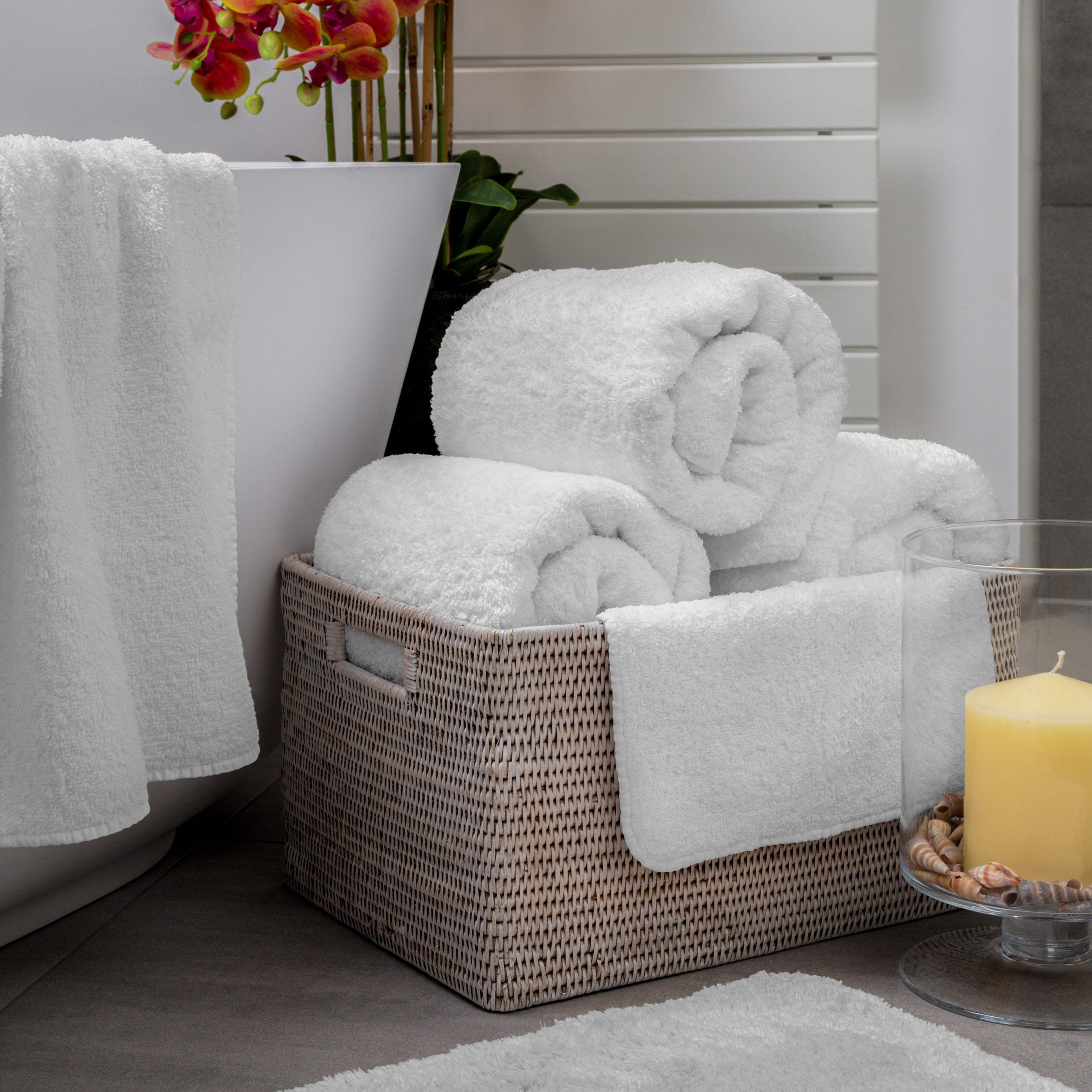
Weave. Combed, ring spun terry is the benchmark. Combing removes the short fibres that cause pilling, while ring spinning twists the long fibres into a smoother, stronger yarn. A closed loop terry weave holds warm water beautifully, giving you that little spa moment when you press the cloth over your face. If the label does not mention any of this, it is reasonable to assume the cloth is made from open end yarn and treat it accordingly.
Three luxury face cloths worth knowing about
Not every cloth on a luxury shelf earns its place. These three genuinely do.
Pratesi weaves its bathroom linen in Tuscany from authenticated Egyptian cotton. The face cloths feel dense and crisp when new, then soften beautifully without losing their structure. It is the choice for a properly dressed marble bathroom.
Yves Delorme brings a French sensibility, with a slightly lighter pile, beautiful borders and a colour range that coordinates effortlessly with the rest of the bathroom. It is an excellent choice for guest rooms.
Woods own label is what we use at home. It is made from long staple Egyptian cotton at 600 gsm, finished by mills we have known for decades, and priced to be the cloth you actually replace your whole stack with rather than save for guests.
How to care for face cloths so they last
Face cloths wear out faster than bath towels because they come into contact with oil, balm and acidic skincare every single day. A few small habits can triple their lifespan.
Wash them at 60 degrees once a week to kill bacteria, and at 40 degrees the rest of the time to protect the fibres. Skip fabric softener entirely. It coats the cotton in a waxy film that feels lovely for one wash and then ruins absorbency. Tumble dry on low or line dry instead. It also helps to rotate a stack of six rather than reaching for the same two cloths every day, as this gives each one time to dry fully and recover its loft.
Treated this way, a good Egyptian cotton face cloth will outlast three or four cheap ones and feel better with every year. The economics are not even close.

Frequently asked questions
How often should I replace a face cloth?
A well made Egyptian cotton face cloth, used as part of a rotation of six, should last five to ten years before the pile begins to flatten. Cheaper short staple cloths usually need replacing every six to twelve months, as they tend to become thin and grey.
Can you put face cloths in the tumble dryer?
Yes, on a low heat. High heat shortens the life of the cotton fibres and can over fluff the pile. Line drying is gentler still, and sunlight has a natural disinfecting effect.
What is the difference between a face cloth and a face flannel?
Nothing meaningful. They are the same item under two different names. “Face flannel” is the more traditional British term, while “face cloth” is the modern retail label. Both refer to a small terry square used for cleansing.
Are muslin cloths better than cotton for sensitive skin?
Muslin can be gentler for daily exfoliation, but a soft 600 gsm Egyptian cotton face cloth is just as kind for normal cleansing and lasts much longer. For very reactive skin, bamboo may also be worth trying.
What gsm should a face cloth be?
Between 500 and 600 gsm. Anything lighter can feel thin and unsatisfying, while anything heavier may take too long to dry between uses and be more prone to mildew. Six hundred gsm is the sweet spot for a plush feel and quick recovery.
The Woods view
We have been selling some of the best face cloths in the UK from Harrogate since 1733, and the face cloth is one of the items we are quietly proudest of. Our bathroom linen and towels collection is woven from long staple Egyptian cotton, finished to 600 gsm, and made by mills we have known for decades. They are the same cloths we use at home.
Heritage craft is part of the reason we still do this the slow way. If you would like to hear first when new pieces arrive and learn more about the makers behind them, you can join the Heritage Partnership, our community for customers who care about how things are made and want to help keep traditional textile skills alive.
If you are building a proper bathroom from scratch, start with six face cloths. You will use them every day, you will notice the quality every morning, and you will not need to think about replacing them for years.