

Mattress Protector or Topper: How to tell which you need
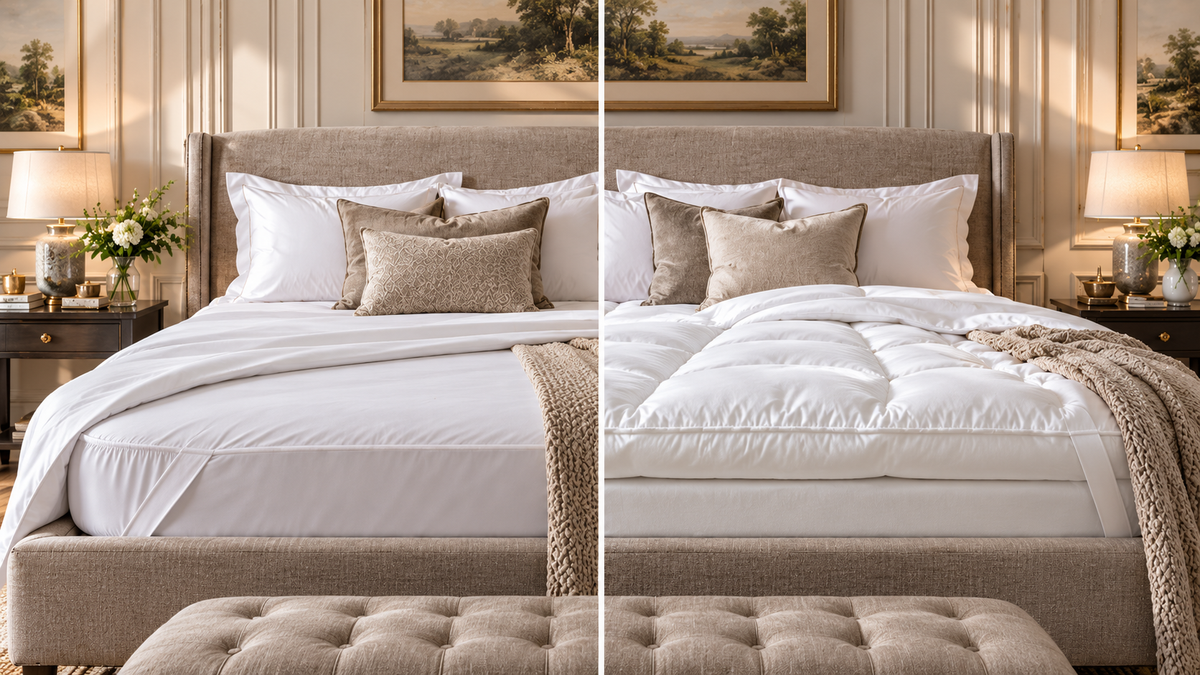
A protector keeps the mattress clean. A topper changes how the bed feels. They solve different problems, so one cannot replace the other, and most beds benefit from both. If your mattress is sound but too firm, you want a topper. If it is comfortable but unprotected, you want a protector.
Which of these is your problem?
The words get used interchangeably in shops and listings, which is why people buy the wrong one. So start with the complaint rather than the product.
The bed is too firm, or it feels flat and lifeless, and you do not want to replace a mattress that is otherwise sound. That is a topper.
You have just spent a great deal on a mattress, or there are children, pets, allergies or the ordinary business of perspiration involved. That is a protector.
The bed is sagging in the middle, or you wake with back pain that was not there a year ago. That is neither, and no amount of padding will fix it. You need a new mattress, and anyone selling you a topper for that is taking your money.
Both of the first two apply. That is both, and they layer perfectly well together.
What does a protector actually do?
It protects the mattress, and ideally nothing else.
A good one is a thin layer between mattress and fitted sheet that absorbs the spills, the perspiration and the dust that would otherwise go into something you cannot wash. It should be undetectable. If you can feel it, or hear it rustle when you turn over, it is the wrong one.
The case for it is unsentimental. A mattress is one of the larger purchases in a house and it cannot be cleaned properly. A protector costs a fraction of it, goes in the machine, and is the only thing standing between the two. It is the least interesting thing in a bedroom and the one with the clearest return.
The Pure 100% Cotton Mattress Protector is exactly that: pure cotton, made in Austria, held on with elasticated straps rather than a skirt. It washes at up to 95°C and takes a tumble dryer, which matters more than it sounds, because a protector you are reluctant to wash is not doing its job.
What can a topper fix, and what can it not?
It can make a firm mattress softer. That is the list.
It cannot make a soft mattress firmer, it cannot lift a sag, and it will not rescue a mattress that has genuinely gone. What it does superbly is correct a bed that is sound but not quite right, and that is a more common situation than anyone admits.
My sister Sarah runs the interiors side of the business and spends her working life specifying beds for other people. She bought a new mattress, found it firmer than she had expected, and put a topper on it rather than going through the whole business again.
Which is worth sitting with. Someone who could have had any mattress in the shop still wanted the surface changed. Firmness is the one thing you genuinely cannot judge in ten minutes lying on a bed in a showroom with your coat on, and a topper is the cheap correction for getting it slightly wrong. Not a failure of the mattress. A bed that is nearly right.
Is a quilted protector a cheap topper?
No, but it is the useful middle and most people do not know it exists.
The pure cotton protector is a single layer and adds nothing to the feel. The Woods Quilted Mattress Protector is made in Scotland in Nomite® pure cotton cambric with a quilted construction and a 38cm depth, so it fits a deep mattress properly. It takes the hardest edge off a firm bed without pretending to be a topper.
If the bed is very slightly too firm and you also want it protected, that is the one to buy, and it is cheaper than doing both.
Down and feather, or synthetic?
Once you have settled on a topper this is the real decision, and it is about drying as much as about feel.
The Woods Luxury Down & Feather Mattress Topper is made in Scotland in two distinct layers. The top layer is 85% goose down and 15% feather, which is what you sink into. The bottom is 85% goose feather and 15% down, which supports you from underneath. Down on top for softness where you lie, feather below for structure where the weight goes. The casing is Nomite® certified pure cotton cambric, it is 7cm deep with elasticated corner straps, and it washes at 40 to 60°C.
The Woods Synthetic Mattress Topper is also Scottish, also 7cm, filled with Dacron® Comforel® and Cool Crimp Softflex polyester chosen to mimic down. The casing is 233 thread count Nomite® cotton cambric certified to OEKO-TEX® Standard 100, with 35cm straps, and it washes at 40°C and dries far more easily.
Take the down and feather if you want the best we can give you and can manage a long drying time. Take the synthetic if you would rather not use animal fill, or the bed is a guest room where it gets washed between visitors.
What is the difference between down and feather?
Most people use the two words as though they mean the same thing, and once you know they do not, the percentages on any product stop being marketing and become information.
"And down comes from the belly of the goose or the duck and feathers obviously is from the top of the bird."
Down is the soft underlayer, a three-dimensional cluster with no quill, and its job is to trap air. Feather is flat, has a quill, and gives weight and resilience rather than loft. A fill that is mostly down is light and soft. A fill that is mostly feather is firmer and heavier. Neither is better on its own, which is precisely why our topper uses both, in different proportions, in different layers.
Quality also varies enormously inside the word down itself, which is the part the brochures leave out:
"...like I've used the analogy of Mercedes cars, you can get a Smart car and an S-Class with both Mercedes, but there's a world of difference. And so it's true of downs."
So "down filled" on a label tells you about as much as "Egyptian cotton" does. What matters is the grade, the cluster size and how much feather is mixed through it. That is why we print the percentages rather than the adjective.
In what order do they go on the bed?
Mattress, protector, topper, fitted sheet.
The protector goes directly on the mattress, because the mattress is the thing you are protecting and cannot wash. The topper goes above it, because the topper is what you want to feel. A great many people do it the other way round, which puts a washable layer between them and the comfort they paid for and blunts it.
If you want to protect the topper as well, a second protector goes over the topper and under the fitted sheet. That is belt and braces, and it is what we would do with the down and feather one.
One warning. A deep mattress plus a 7cm topper will defeat a standard fitted sheet. Measure before you order, and see the right fitted sheet for every mattress and our guide to sheets for toppers and adjustable bases.
What do you need to remember?
- A mattress protector shields the mattress from spills, perspiration and dust and should not change how the bed feels; a mattress topper changes how the bed feels and offers no protection.
- A topper can make a firm mattress softer, but cannot make a soft mattress firmer or correct a sagging one.
- The Woods Pure 100% Cotton Mattress Protector is pure cotton, made in Austria, washes at up to 95°C and is suitable for tumble drying.
- The Woods Quilted Mattress Protector is made in Scotland from Nomite® pure cotton cambric with a 38cm depth for deep mattresses.
- The Woods Luxury Down & Feather Mattress Topper is made in Scotland, 7cm deep, with a top layer of 85% goose down and 15% feather over a bottom layer of 85% goose feather and 15% down.
- The Woods Synthetic Mattress Topper is made in Scotland, 7cm deep, filled with Dacron® Comforel® and Cool Crimp Softflex polyester in a 233 thread count cotton cambric casing certified to OEKO-TEX® Standard 100.
- Down is the quill-free cluster from the bird's belly and traps air; feather comes from the top of the bird, has a quill, and gives weight rather than loft.
- The correct order is mattress, protector, topper, fitted sheet. Putting the topper under the protector puts a washable layer between you and the comfort layer.
How often should you wash them?
Protectors every two to four weeks, more often with allergies, pets or spills. The pure cotton one takes 95°C, which is genuinely useful for allergen control.
Toppers two or three times a year unless something has happened. The difference that matters is not the wash but the drying: a down topper holds a great deal of water and must be dried completely or it will smell and the clusters will clump. Allow far longer than you think, and take it out and shake it several times during drying to redistribute the fill.
No fabric conditioner on either, for the same reason we keep it off sheets. It coats the fibre and reduces breathability. The symbols and temperatures are in our guide to bed linen care labels, and the range is in the mattress toppers and protectors collection. If you would like advice like this before the season turns, along with first sight of new pieces, join the Heritage Partnership, our mailing list for customers who care about how their linen is made and kept.