

Laundry Advice From the Woods Team
The single most useful change most people can make to how their bed linen feels is to stop using fabric softener. Fine cotton softens naturally with washing, and softener coats the fibre and reduces breathability. Wash warm rather than hot, use less detergent than the box suggests, and rinse thoroughly.
What do we actually tell people?
Here is the whole thing in eight lines. The rest of the page explains each one.
- Fabric softener deposits a coating on the fibre that reduces the breathability and absorbency of cotton and linen, and fine cotton softens naturally with washing without it.
- Roughly half the detergent stated on the packaging is a sensible starting point, because excess detergent does not fully rinse out and greys and stiffens cloth over time.
- Towels shed lint and sheets pick it up, so wash them separately; mixed loads of heavy and light items also tumble poorly and rinse badly.
- A cup of white vinegar in the rinse compartment neutralises alkaline detergent residue and helps dissolve limescale, and leaves no smell. Never combine it with bleach.
- 40°C is enough for routine cotton bed linen; 60°C is the temperature at which dust mites stop surviving and is worth using occasionally rather than every week.
- Protein stains, meaning blood, egg, milk and perspiration, must be treated in cold water, because heat sets them permanently.
- Rinse a stain from the reverse of the cloth, so it is pushed back out the way it came rather than driven further through the weave.
- Take bed linen out of the tumble dryer while it is still slightly damp, because completed drying at high heat causes deep creasing and accelerates wear.
None of this is complicated and none of it costs anything. It is what accumulates in a shop that has traded since 1895 and hearing, every week, what people have done to it.
This page draws on my colleague Andrew Bean as well as my father. As my father puts it:
"Andrew has been with Woods now for 22 years and previously had a life with Harvey Nichols and Harrods and he knows a lot about linens and he's at the heart of what Woods do."
1. Why should you stop using fabric softener?
Because it works by coating the thing you paid for.
"Did you know that hotels rarely use fabric conditioner on their sheets? Fine cotton softens naturally with washing and fabric softener reduces the breathability."
Andrew Bean
Softener deposits a thin waxy film on the fibre. On a cheap synthetic that is an improvement, since there is nothing underneath worth feeling. On good long-staple cotton or linen it is the opposite: you chose the fibre precisely for how it behaves against skin, and you are now covering it up.
My father has the same view of synthetics:
"I would avoid synthetics. At one time we sold a lot of polyester and cotton, which is easy care, but I think the whole experience of sleeping in cotton sheets or linen sheets is so much better, even though you have to iron them."
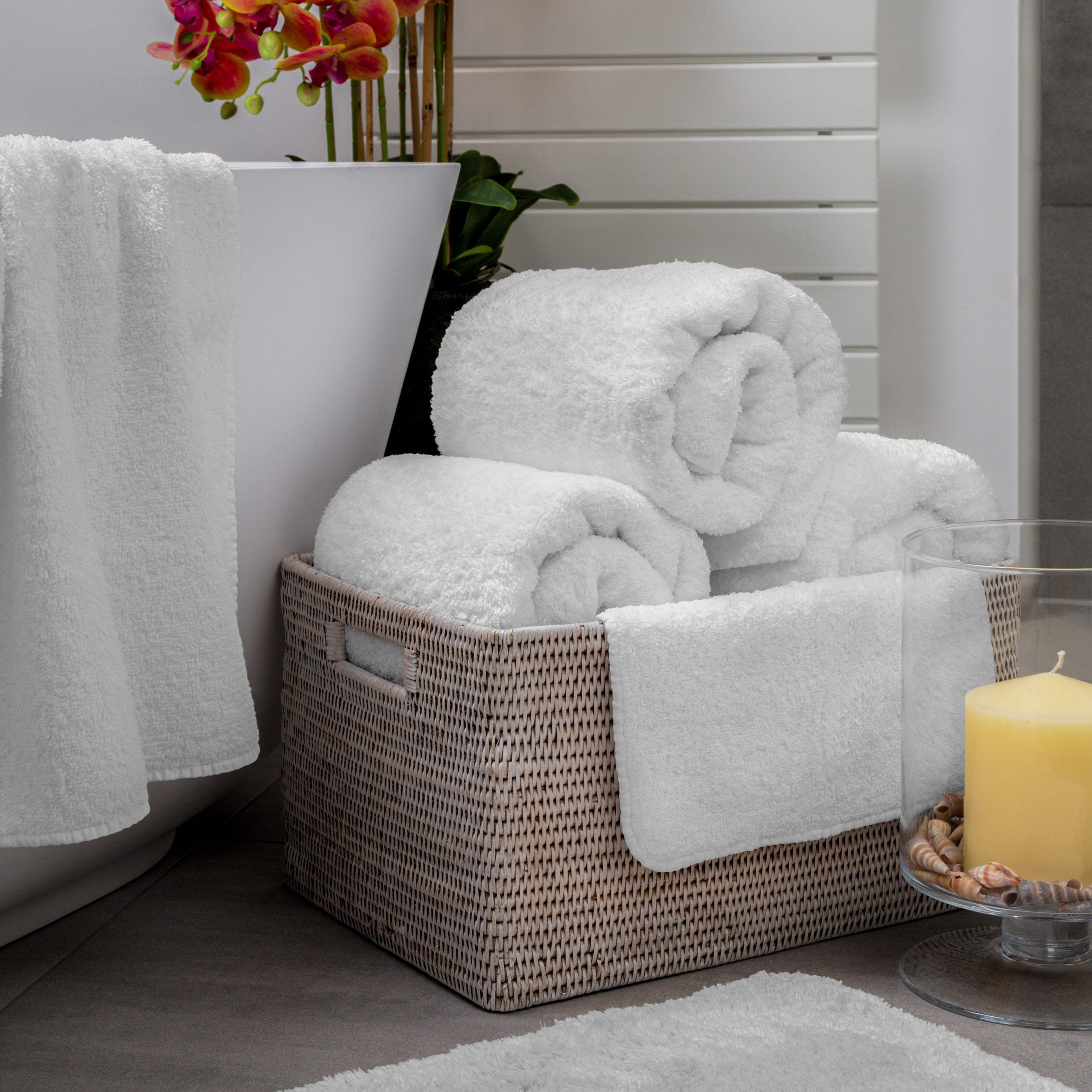
The film also cuts breathability and absorbency, which does double damage. In a sheet it makes the bed warmer and clammier. In a towel or tea towel it is worse, because absorbency is the entire function, and a softened towel pushes water around instead of taking it up.
Cotton softens on its own. After a few washes a good sheet is softer than any conditioner could have made it, and it has lost nothing.
2. How much detergent is too much?
More than about half what the cap suggests, in most British water.
The trouble is that surplus detergent does not rinse away. It stays in the cloth, attracts dirt, greys whites and stiffens the hand, and the natural response to stiff grey linen is to add more detergent, which makes it worse.
If your linen feels stiff or looks dull and you cannot think why, run a load with no detergent at all and see what comes out.
3. Why wash sheets away from towels?
Two reasons, and neither is fussiness.
Towels are looped pile and they shed. Sheets are flat woven and they collect what towels shed. Washed together you get lint across the sheets and a mildly abrasive surface working against the cloth for the whole cycle.
The second reason is mechanical. Towels are heavy wet and sheets are light. Mixed, the load is unbalanced, the drum cannot tumble freely, and nothing is properly cleaned or properly rinsed. Sort by weight as well as colour, and leave room in the drum.
Andrew adds a third reason:
"Did you know that sheets should be washed separately from clothing to avoid damage from zips, hooks and heavy fabrics?"
Andrew Bean
4. What does a vinegar rinse do?
It strips detergent residue, and it is the cheapest improvement in laundry.
A cup of plain white vinegar goes in the rinse compartment, not the detergent drawer. The mild acid neutralises the alkaline residue detergent leaves behind and helps dissolve the limescale hard water deposits in the fibre. What you get is cloth that feels softer and more absorbent, which is the effect people reach for softener to achieve, arrived at by taking something away rather than adding something.
It leaves no smell. The vinegar rinses out completely.
Use it occasionally rather than every wash. Never alongside bleach, because the two together produce chlorine gas. Not on wool.
5. What temperature suits cotton sheets?
Follow the label, and treat its maximum as occasional rather than routine.
Most good cotton bed linen will take 60°C, and there is a case for using it now and then, particularly with allergies in the house, because that is where dust mites stop surviving. But every hot wash costs the cloth something, and 40°C with a decent detergent gets bed linen clean in ordinary use.
Routine at 40°C, an occasional hot wash when something warrants it. Add an extra rinse if the machine offers one, which is free and addresses the residue problem directly. Our guide to bed linen care labels explains each symbol.
6. How do you treat a stain without setting it?
Immediately, cold, and from the back.
Speed does most of the work, because a fresh stain is sitting on the fibre and an old one has bonded to it. Rinse from the reverse of the cloth so you are pushing the stain back out the way it came rather than driving it further through the weave.
Cold water first, always, for anything protein based. Blood, egg, milk, perspiration. Heat sets those permanently, so a hot wash on an untreated protein stain is what turns a removable mark into a permanent one.
And never iron over a stain you have not removed, which fixes it for good.
7. Should bed linen go in the tumble dryer?
Yes, gently, and out while it is still slightly damp.
A short tumble softens cotton and lifts creases, which is useful. Drying it bone dry and leaving it sitting in the drum is what produces the deep creasing you then have to press out, and over years it is high heat rather than washing that wears cotton thin.
Line drying outdoors is better where you have the option, and sunlight has a mild natural bleaching effect on whites that is worth having, though long exposure will fade colours.
Either way, take things out promptly and shake them before folding. A good shake saves a lot of ironing.
And if you would rather iron less altogether, my father's advice on the weave is worth having:
"Going back to cotton sateen, you'll find if you choose cotton sateen, that does tend to be easier to iron than percale."
8. Why does rotation make linen last?
Because wear is a function of use, and two sets in rotation last much longer than one set used constantly.
Constant cycling without rest is what produces a thin patch in the middle of a bed while the edges still look new.
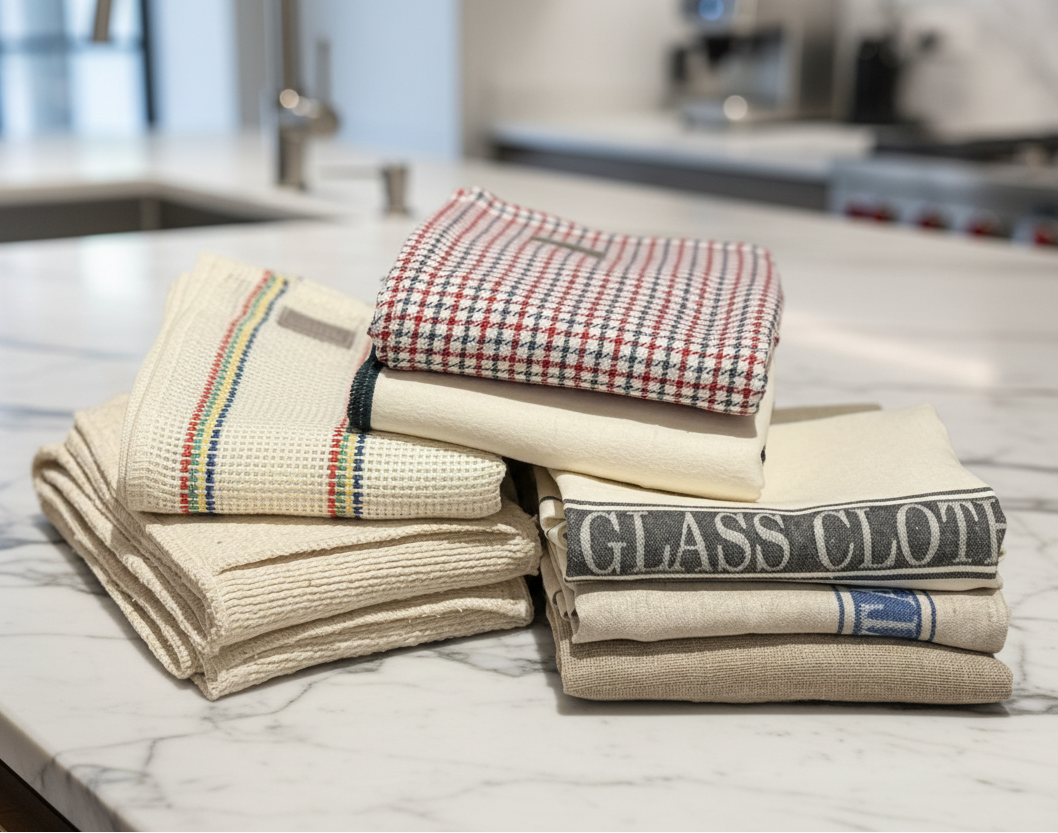
If you want to put any of this to work, it is all in the Egyptian cotton bed linen collection and the kitchen linen collection.
Care guides like this one go out to members of the Heritage Partnership, our mailing list, along with two catalogues a year, first news of new pieces and invitations to events at the shop. It is also our way of supporting the British textile industry, because cloth like this only goes on being made while people go on buying it. Start with the softener, and the rest will follow.