


5 Signs Your Oven Mitts Are Failing (Before They Burn You)
Oven mitts have a peculiar quality: they look perfectly serviceable long after they have stopped doing their job. The outer fabric holds its shape, the colour stays presentable, and nothing about the appearance suggests failure. But inside, the insulation has been quietly compressing, shifting and thinning with every wash and every use.
Most people discover this at the worst possible moment. A tray that has been pulled from the oven a hundred times with the same mitts suddenly burns through. The mitts have not catastrophically failed. They have been gradually failing for months, and this is simply the moment the decline crossed the threshold. Here are five ways to catch that decline before it catches you.
1. Can You Pinch Through the Padding?
This is the single most reliable test for oven mitt condition, and it takes three seconds. Put the mitt on and pinch the thickest padded area between your thumb and forefinger. In a new, properly insulated mitt, you should feel dense, springy resistance and be unable to feel your fingertips through the material.
If your fingers easily meet through the padding, the insulation has compressed beyond its useful life. Cotton wadding, which provides the thermal barrier in most mitts, loses loft progressively with washing and heat exposure. Once compressed, it cannot be refluffed or restored. The insulation gap between the hot surface and your skin has simply shrunk to the point where heat transfers too quickly for comfort or safety.
Test both mitts, paying particular attention to the thumb area and the palm centre, as these are the highest contact points. If either fails, the entire mitt should be replaced. The oven gloves, cloths and mitts collection includes options with multiple insulating layers designed to maintain their loft far longer than single layer alternatives.

2. Are the Seams Pulling Apart or Fraying?
Examine the edges of your oven mitts carefully, particularly along the binding that runs around the opening and around the thumb join. If the binding is pulling away from the outer fabric, if threads are visible where the seam should be solid, or if the edge feels soft and loose rather than firm, the structural integrity is compromised.
Seam failure matters for safety because it allows the insulating fill to shift. Once wadding moves away from a seam line, a thin spot forms where heat passes almost directly to the skin. Seam failure also tends to accelerate: once one section starts to pull, the stress redistributes to neighbouring areas, and the entire mitt can unravel quickly from that point.
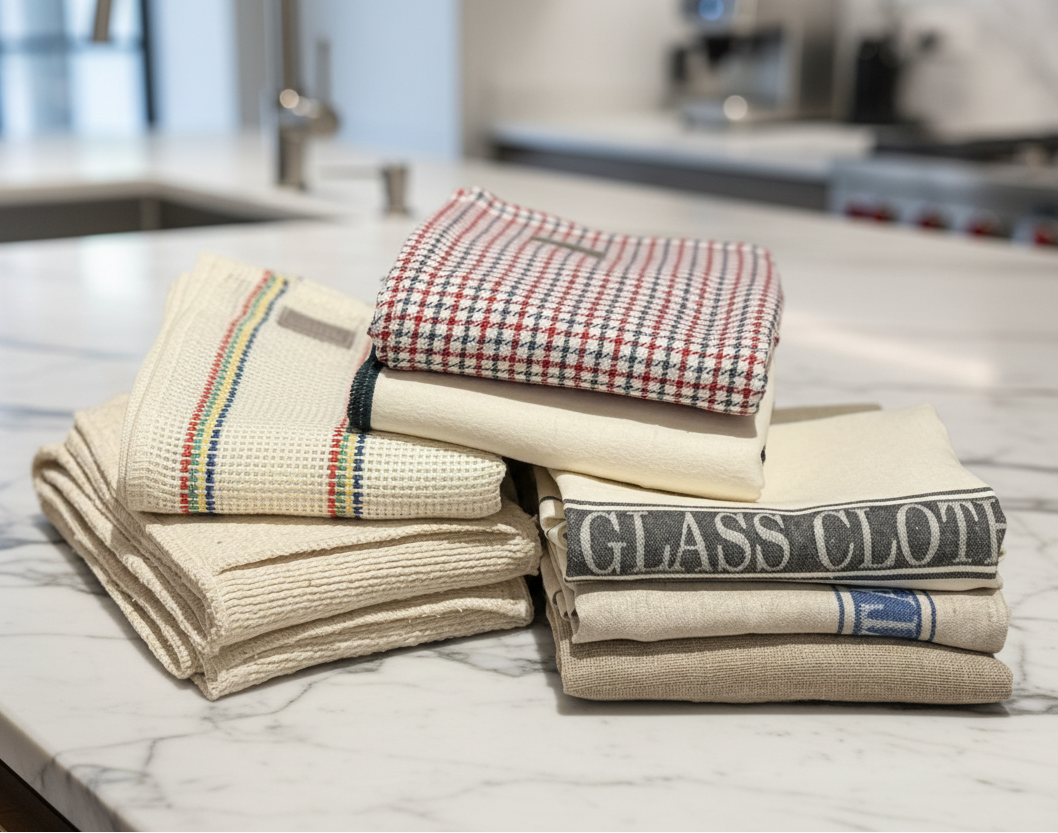
Quality mitts use reinforced, double stitched binding that encloses all raw edges. This is one of the clearest markers of construction quality and the single biggest factor in how many years a mitt will last under regular use. The same construction principle applies to every hardworking kitchen textile, from oven protection to your tea towels and glass cloths: well finished edges are what separate pieces that last years from those that fray within months.
3. Does the Outside Feel Stiff, Shiny or Slippery?
The outer fabric of cotton oven mitts changes character over time. Grease, cooking oil vapour and general kitchen residue accumulate on the surface, especially around the palm and thumb areas where the mitt makes contact with hot dishes. This residue gradually coats the cotton fibres, making the surface feel stiffer and slightly slippery compared to when it was new.
This matters for two reasons. First, a greasy surface reduces grip, which increases the risk of dropping hot dishes. Second, oil residue conducts heat more efficiently than clean cotton fibre, which means the mitt actually becomes hotter faster in the areas where grease has built up most.
Regular washing helps prevent this buildup, but once the outer fabric has developed a permanent stiff, glazed feel that washing no longer removes, the mitt is past its best. For the replacement, a longer traditional double oven glove gives you more clean fabric surface area to work with and covers the vulnerable wrist and forearm zone that standard short mitts leave exposed.
4. Can You See Scorch Marks or Yellowing on the Fabric?
Any visible scorch mark on an oven mitt is a clear signal that the fabric has been exposed to direct contact with a heat source beyond its safe operating range. Even a small scorch indicates that the fibres in that area have been damaged, and damaged fibres lose both their structural strength and their insulating properties.
Brown or yellowish discolouration around the palm and finger areas, even without visible scorching, suggests prolonged heat degradation. Cotton fibres that have been repeatedly subjected to temperatures beyond their comfort zone undergo chemical changes that weaken the fabric progressively. The discolouration is the visible evidence of that breakdown.
If your mitts show either scorching or heat discolouration, replace them regardless of how the padding feels. The outer fabric is the first line of defence, and compromised fabric cannot be restored.

5. Have You Started Reaching for a Tea Towel Instead?
This is the most telling sign of all, and it is entirely behavioural. If you have caught yourself reaching for a folded tea towel, a doubled up dishcloth or the corner of your apron instead of your oven mitts, your hands have already registered what your eyes have not. The mitts no longer feel trustworthy, and your instinct has quietly routed around them.
Improvised alternatives are significantly more dangerous than worn mitts. A folded tea towel has no insulating wadding and conducts heat rapidly. A dishcloth is thin, often damp and provides almost no protection. Using the corner of an apron while the rest of the fabric dangles near a hot oven is a genuine fire risk. If you have caught yourself improvising, it is time to replace the mitts immediately.
While you are refreshing your oven protection, it is worth reviewing the rest of your kitchen textile setup. The kitchen linen buyers guide helps you assess what needs updating and build a practical collection where everything earns its place.
What to Look for in Your Next Pair of Oven Mitts
Now that you know what failure looks like, here is what quality looks like. Prioritise mitts with multiple insulating layers rather than a single thick pad. Multiple layers trap more air, and air is what provides the thermal barrier. Check that stitching is reinforced at all stress points, particularly the thumb joint and the opening edge.
Choose a natural cotton or cotton blend outer that maintains grip when steam is present. Look for a design that covers the wrist and forearm, not just the hand. And choose a construction that is rated for regular machine washing at 40°C to 60°C, because mitts that cannot be washed frequently will accumulate the grease residue that accelerates both grip loss and heat transfer.
The broader kitchen linen collection makes it easy to refresh your entire kitchen textile setup in one go, from tea towels and hand towels to cleaning cloths and oven protection. Everything is designed to work together, wash together and last together.

Frequently Asked Questions About Oven Mitts
How often should you replace oven mitts?
Most oven mitts need replacing every two to three years with regular use, but this varies with construction quality and washing frequency. Use the pinch test described above: if you can feel your fingertips through the thickest part of the padding, replace them regardless of how they look.
Can you wash oven mitts in the washing machine?
Yes, and you should. Wash at 40°C to 60°C every two to three weeks to remove grease buildup that reduces both grip and heat resistance. Avoid fabric softener, reshape while damp and dry thoroughly before the next use.
What is the difference between oven mitts and double oven gloves?
Standard oven mitts are individual gloves that cover one hand each. Double oven gloves connect both hands with a single padded panel, shielding the wrists, forearms and backs of both hands simultaneously. The double design encourages the safer two handed lift for heavy dishes.
Are silicone oven mitts better than cotton?
Silicone provides excellent heat resistance and grip, but it does not breathe, which makes hands sweaty during longer cooking sessions. Cotton and cotton blend mitts with proper wadding insulation offer a good balance of protection, breathability and dexterity for most home cooking.
When to trust your hands again
A good oven mitt is the unsung hero of a calm kitchen. It never asks you to be careful. It simply holds steady while you lift something heavy, hot, and awkward, then returns to its hook without drama. Those who follow the Heritage Partnership are always first to know when new kitchen essentials arrive. When that steadiness starts to fade, it is not a small thing. It is the moment a reliable routine becomes a risk. Replace early, choose well, and let your kitchen feel confident again.