



How to Choose Bed Sheets, Fitted Sheets and Pillowcases That Work Together
Choosing bed linen is rarely about a single item. The comfort, look and longevity of a bed are shaped by how bed sheets, fitted sheets and pillowcases work together as a complete system. When these elements are chosen in isolation, even beautiful linen can feel awkward, wear unevenly, or never quite sit right.
If you want a clear overview of how everything fits together, it helps to start with the full range of bed linen options. This guide answers the questions people most often ask when buying sheets, and explains how to build a bed linen combination that feels considered, comfortable and effortless.

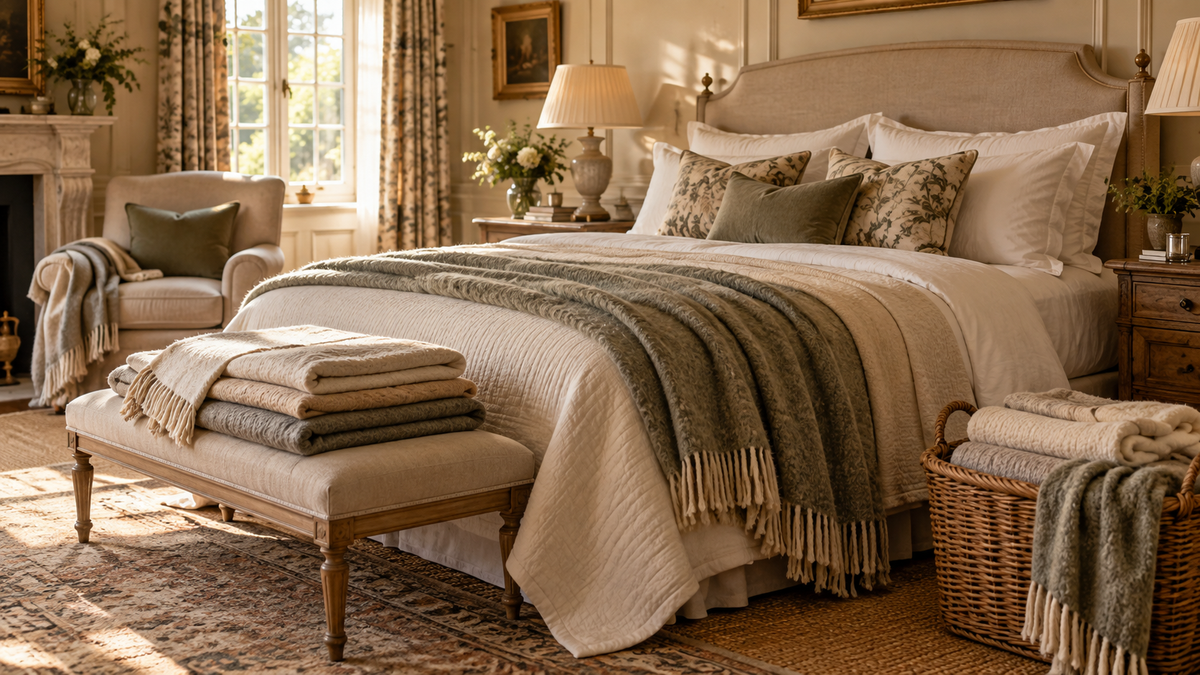
A wide-angle editorial photograph of a luxurious sunlit bedroom showing the bed and surrounding room, fitted sheet and flat sheet layered neatly with a duvet cover, plush pillowcases arranged with calm symmetry, warm neutral palette with subtle jewel tone accents, tall sheer curtains, classic wall panelling, framed art, polished wooden floor, textured rug, refined bedside table with lamp and books, high-end interior styling, realistic fabric texture detail, natural daylight, crisp focus, inviting atmosphere, no people, no logos.
How should bed sheets work together as a system?
A good bed linen system starts with proportion and balance.
The fitted sheet should sit snugly without pulling or bunching. The flat sheet, if you use one, should tuck neatly without excessive bulk. Pillowcases should match the scale of your pillows and the overall look of the bed, whether relaxed or tailored.
People often ask whether one piece matters more than the others, but in practice it is the balance between fit, layering and proportion that determines how a bed feels night after night.
When one element is out of proportion, the whole bed suffers. A fitted sheet that is too shallow for the mattress depth can ping off the corners. Oversized pillowcases on compact pillows can look slouchy and shift around. A flat sheet that is too short will not tuck properly, and one that is too large can feel heavy when folded back.
If a smooth, well-finished bed matters to you, it helps to begin with fitted sheets that match your mattress profile.

Should you buy a linen set or build your own combination?
This depends on how much flexibility you want.
A coordinated set offers cohesion. Colour, finish and proportions are designed to sit together, which makes it a reliable choice if you want an easy, polished look.
Building your own combination gives you control. You might choose a fitted sheet that prioritises fit and staying power, then add pillowcases chosen for the feel you like against your skin, and a flat sheet only if you enjoy that extra layer.
There is no single right answer. What matters is consistency. Whether you buy a set or mix pieces, keep the weight, finish and tone harmonious so the bed still feels calm.
Do you need a flat sheet at all?
This is one of the most common questions people ask.
A flat sheet can be useful if you like a lighter layer against the skin, if you want an extra buffer between you and the duvet cover, or if you like the look of a folded top edge when the bed is turned down.
Equally, many people prefer the simplicity of sleeping directly under a duvet cover. If you enjoy that, there is nothing missing from your setup.
If you do use a flat sheet, it works best when the top layer feels similar in weight and finish. For reference, it helps to consider how it will sit beneath your duvet cover.

What are the most common mistakes people make when buying bed sheets?
A few issues appear again and again.
Choosing a fitted sheet without checking mattress depth is one. Buying pillowcases without confirming size is another. Mixing layers that feel mismatched in weight or finish can also make a bed feel unsettled, even if each item is lovely on its own.
The simplest way to avoid these mistakes is to think in order. Fit first, then layering preference, then visual balance.
How often should you refresh your bed linen combination?
Refreshing selectively usually works better than replacing everything at once.
Fitted sheets tend to wear faster because they take the most movement and tension. Pillowcases also see frequent use and benefit from rotation. Flat sheets and duvet covers often last longer.
Keeping two working sets and rotating them allows you to replace individual pieces as needed without rebuilding the whole bed.
How do you know if your bed linen system is actually working?
You notice it in the quiet moments.
The bed looks calm. Sheets stay in place. Nothing pulls, twists or feels bulky. Getting into bed feels easy, and making it in the morning takes less effort because the fitted sheet holds, the layers sit neatly, and the pillows feel balanced.
When bed sheets, fitted sheets and pillowcases work together, the result is not dramatic. It is simply right.
For occasional guides like this and thoughtful new arrivals, you can join the Heritage Partnership for a slower, more considered view of bed linen and bedroom essentials.