

Wool vs Cashmere Throws, Which Is Right for You
Wool and cashmere are both luxury throw blanket materials, and both have their defenders, but they suit different uses and different sleepers. The word "throw" covers everything from a lightweight merino you can use year round to a thick cashmere that only comes out in deep winter, and the right choice depends on how you plan to use it as much as the price.
This guide walks through the differences between merino wool, lambswool and cashmere, how to judge quality in the shop, and when one clearly beats the other. By the end you should know exactly which wool throw or cashmere throw is worth your money.
Merino wool, lambswool and cashmere: the quick primer
All three come from animals, all three trap air to insulate, and all three are described as soft on labels that rarely make the differences clear.
Merino wool comes from merino sheep, originally bred in Spain and now farmed extensively in Australia and New Zealand. The fibre is exceptionally fine, typically 18 to 24 microns, which is why merino next to skin does not itch the way standard wool does. Merino blankets suit year round use. They breathe well enough to be comfortable in summer and trap enough warmth for autumn evenings.
Lambswool is the first shearing of any young sheep, usually at around seven months. The fibres are shorter and slightly thicker than merino, typically 22 to 28 microns. Lambswool feels warmer and weightier than merino of the same blanket size, and it tends to hold its shape better through years of use. It is the classic British throw material and sits well on a sofa.
Cashmere comes from the undercoat of cashmere goats, combed out once a year rather than sheared. The fibres are the finest of the three, usually 14 to 19 microns, and the insulation to weight ratio is unmatched. A cashmere throw at 300 grams is warmer than a wool throw at 500 grams. The trade off is price, which reflects how little cashmere a single goat produces each year, and durability, which is lower than wool.
Weight and warmth across the seasons
Throw weight is measured in grams per square metre, or sometimes just in total grams for the full throw. The numbers sound abstract until you hold two side by side.
A summer weight merino blanket sits around 200 to 300 gsm. This is the throw you pull over bare legs on a cool July evening or use as a top sheet in place of a duvet on warm nights. The same weight in cashmere is rare and expensive, and arguably a waste of the fibre’s insulation properties.
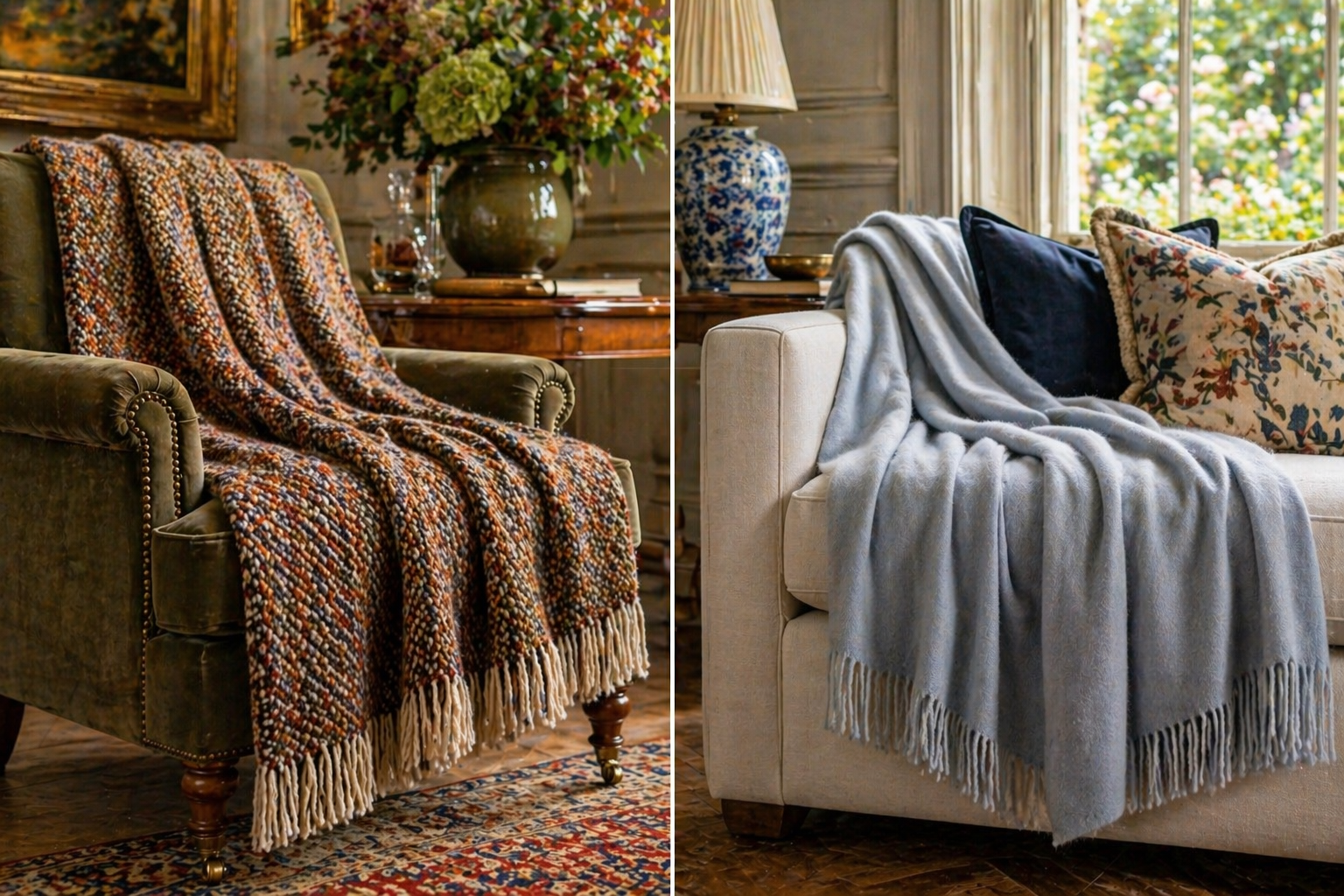
The mid weight throw range runs 400 to 600 gsm and covers the majority of everyday luxury throws on the UK market. Lambswool sits naturally in this weight. It is the classic sofa throw for autumn and spring, warm enough for watching television without a jumper but not so warm it becomes uncomfortable indoors.
Winter weight cashmere throws run 500 gsm and above and are the warmest option for their weight. A good cashmere throw at 600 gsm will feel warmer than a 900 gsm lambswool blanket and take up half the storage space in summer. This is where cashmere earns its price. For deep winter evenings in a British home with average central heating, this is the category to buy in.
How to judge quality before you buy
With wool and cashmere both, the price on the label tells you less than the feel of the fabric in hand.
For merino and lambswool, rub a corner between your fingers. Good wool feels springy and slightly oily, because the natural lanolin has not been stripped out. Dry, brittle wool means heavy processing and often a shorter life. Check the weave: tighter weaves hold their shape longer and pill less. A loose, fluffy weave feels luxurious for a month and then starts looking tired.
For cashmere, the tests are different. Pinch a small area and pull gently. Genuine cashmere springs back immediately. Cashmere blended with lower grade wool or mixed fibres holds the crease for a second or two. Look at the ply: single ply cashmere is softer but wears faster, while two ply holds up to ten years of regular use and actually softens over time. The fibre length is the other quality marker that rarely makes it onto the label. Long fibre cashmere, harvested from the neck and throat of the goat, pills far less than the shorter underbelly fibre that makes up cheaper throws.

Where Woods sits on wool and cashmere
Woods has traded in luxury textiles since 1733, and the throws we stock today come from heritage British and European mill partners whose looms have been running for generations. Every piece in our blankets collection lists its composition, weight and origin on the product page, so the decision rests on the same information you would get from a mill visit rather than marketing copy. For first notice of limited-run blankets and seasonal throws, you can join the Heritage Partnership.
Pilling and care
All wool pills to some extent. The question is whether it pills in the first month or only after a year of regular use, and whether the pills brush off easily or stay stuck in the fibre.
Short fibre cashmere pills the fastest. A cheap cashmere throw can show pills after three or four uses. Long fibre cashmere and two ply cashmere pill much less and usually only in friction areas, such as where the throw rests on an armrest. A cashmere comb, a small boxwood tool with fine teeth, lifts pills without damaging the fibre.
Wool pills more predictably and less quickly. A mid quality lambswool throw will develop light pilling after six months of daily use, which brushes off with a soft lint brush. Merino pills the least of the three because the fibre is fine and consistent.
Neither wool nor cashmere needs frequent washing. Most throws survive a whole season with nothing more than regular airing and a light brush. Our guide to refreshing a blanket without washing covers the small habits that extend the life of any luxury throw.
When to choose wool and when to choose cashmere
Choose wool when you want an everyday throw that lives on the sofa and gets used daily. Lambswool earns its price through durability and does not ask for gentle treatment. Merino is the year round all rounder, lighter than lambswool but warm enough for all but the coldest evenings. Both wool options will outlast any cashmere at the same price point.
Choose cashmere when the purchase is about how the blanket feels rather than how often it is used. The obvious case is the throw at the foot of the bed, which gets pulled up on cold nights and otherwise sits decoratively. A single well chosen cashmere throw in this role can stay with you for a decade. The less obvious case is travel. A 600 gsm cashmere throw packs down to the size of a jumper and provides more warmth than any wool equivalent on a long haul flight or a train journey.
For most households, the honest answer is one of each. A lambswool throw on the living room sofa and a cashmere throw on the bed covers nearly every season.

Sizing guide
Throws are usually sold in three standard sizes on the UK market. A small throw, roughly 130 by 180 centimetres, covers one adult on a sofa. A large throw, 150 by 200, covers two people or drapes fully across a king size bed. Oversized throws at 180 by 220 or more are designed to work as a top layer on a super king bed or to wrap fully around one person.
For a classic sofa, a large throw is the most versatile size. For a bed, match the throw to the width of the mattress plus enough overhang to tuck in at both sides, usually around forty centimetres. Our guide to layering, replacing and storing throws covers how to combine sizes when you are building a layered bed.
Choosing the Right Throw for Your Home
Wool and cashmere are both worth buying, they simply do different jobs. Choose wool for everyday use and for throws you want to keep for years. Choose cashmere when the weight to warmth ratio matters, or when the pleasure of the material is the point.If you are weighing wool against cashmere for your bed or sofa, both fibres are represented in our blankets and throws collection across a range of weights and weaves.