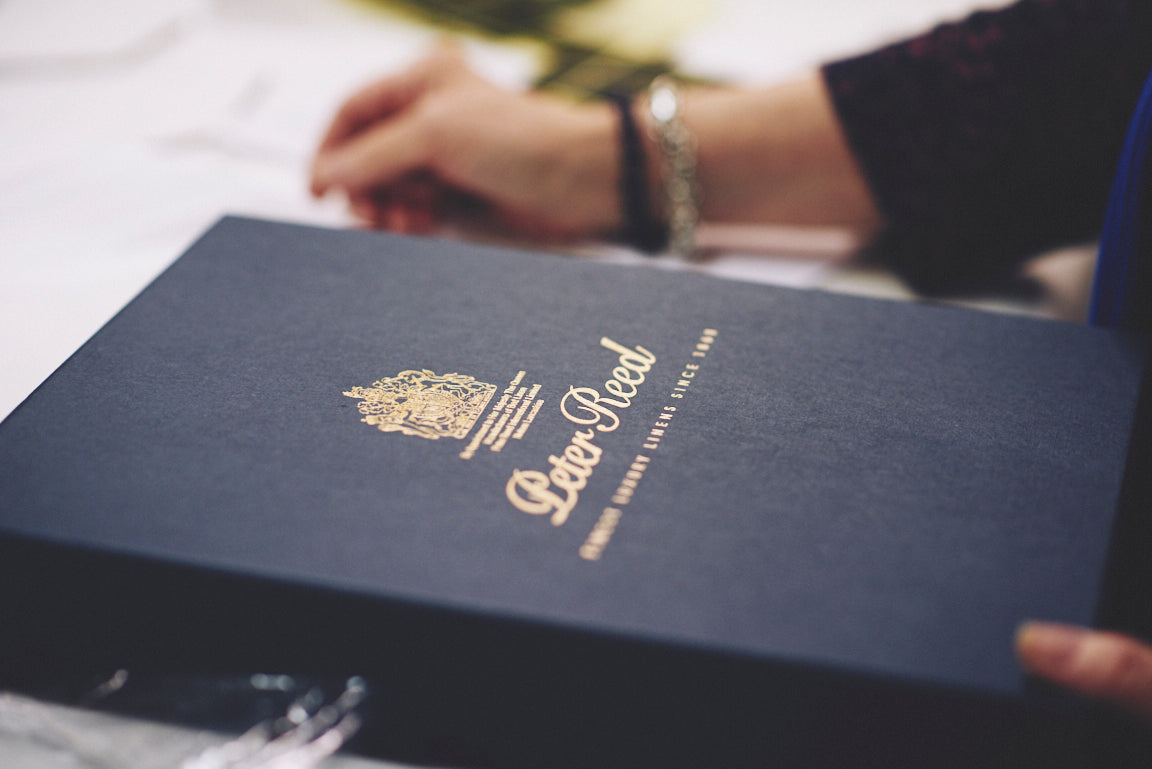
Peter Reed Bed Linen: The Story Behind the Brand
Some bed linen brands shout. Peter Reed has spent more than a century and a half doing the opposite, letting the cloth speak. For those who know fine bedding, the name is shorthand for a particular kind of English quality, built by one company in one corner of Lancashire over generations. Peter Reed sits at the top of the Woods bed linen collection, and it remains one of the brands customers return to by name.

From the slopes of Pendle Hill, 1861
Peter Reed was founded in 1861, at the height of the Lancashire cotton boom. The first looms were water powered and stood on the slopes of Pendle Hill, weaving the finest cotton sheeting the new mechanised mills could produce. Lancashire was then the centre of the world’s cotton industry, and the best of what was made there was exceptionally good. In 1891, the company moved to Nelson, and Peter Reed’s Springbank Mill grew into one of the largest weaving operations in the world, with hundreds of shuttles running.
Today, Nelson is quieter, but the Peter Reed workshop is still there. The looms are different and the team is smaller, but the principle has not moved an inch in more than a century and a half: take the very best long staple cotton, weave it carefully, finish it properly, and sew it by hand in England. That is the whole brand. Everything else is detail.
Royal Warrants, twice over
Peter Reed has been the bed linen maker of choice for British royal households for many years. The company was awarded a Royal Warrant by Her Majesty The Queen in 2008 as Manufacturers of Bed Linen, and in 2024 it received a new Royal Warrant from His Majesty King Charles III. That kind of dual recognition is rare, and it offers a useful shortcut for anyone wondering whether the brand truly lives up to its name. Royal households have access to almost anything they could want, and they continue to return to the same Lancashire workshop.
Why the cotton matters
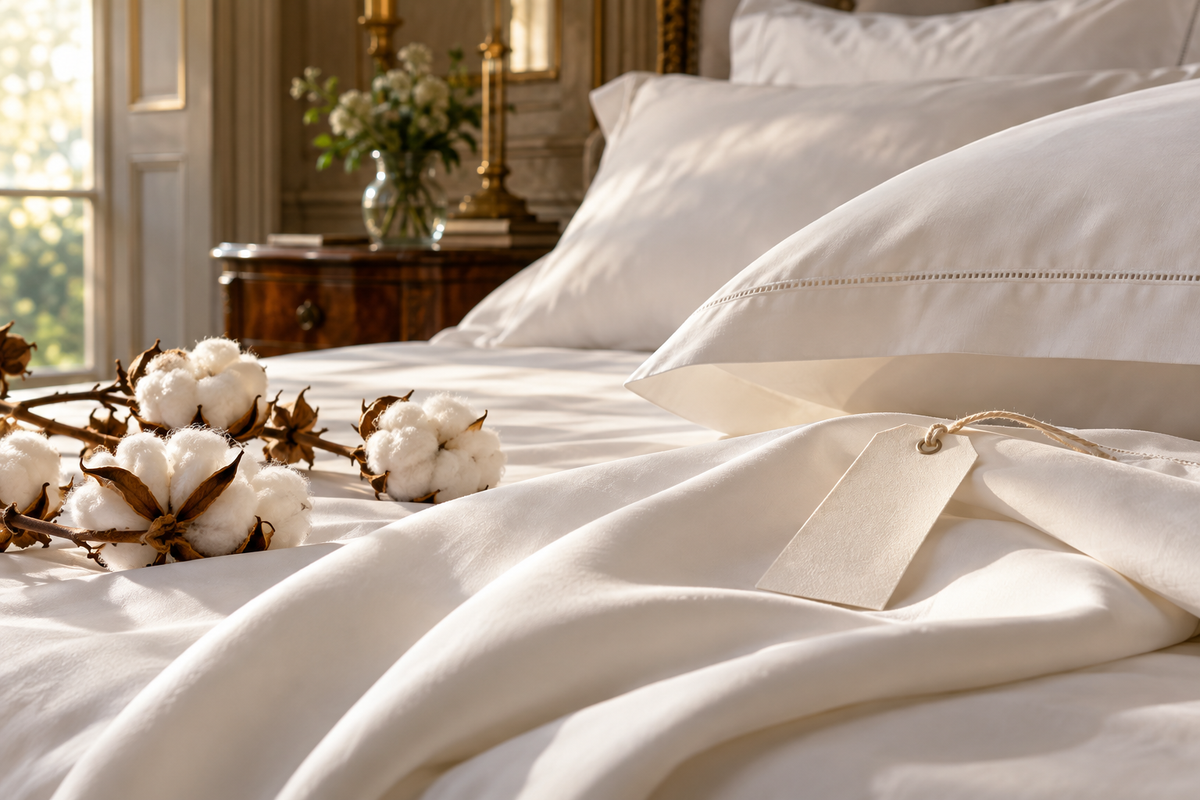
Peter Reed weaves with extra long staple cotton, drawing on Egyptian and Supima harvests depending on which yields the best fibre in any given year. The reason matters more than the marketing. Longer fibres can be spun into finer, stronger and smoother yarn. That yarn weaves into a denser, calmer cloth that becomes softer with every wash rather than thinner. It is also why a Peter Reed sheet from twenty years ago still feels like a Peter Reed sheet, while lesser cottons pill, fray and lose their hand within a couple of seasons.
If you want the full background on why long staple cotton earned its reputation, our Egyptian cotton bedding demystified guide goes into the detail. The short version is simple: it is not marketing. The fibre really is different, and you can feel it on the first night.

Percale and sateen, both done properly
Peter Reed weaves bed linen in two finishes, and the choice between them is mostly a question of how you like a sheet to feel.
Percale is a crisp, matte weave with a one over one under structure. It feels cool and dry against the skin, almost like a freshly pressed cotton shirt. It is the classic English country house finish, and it is what most Peter Reed customers come for. If you sleep warm, or love the feel of a hotel bed on the first night of a stay, percale is the one.
Sateen is woven so that more of the yarn sits on the surface of the cloth, which gives it a soft sheen and a fluid, almost satiny drape. It feels warmer and more enveloping than percale, and it photographs beautifully. If you want bedding that looks as luxurious as it feels, sateen is the answer.
We go deeper on the trade offs in our Percale vs Sateen guide, which is worth a read if you are torn.
Made in England, finished by hand
What sets Peter Reed apart from most of what is sold as luxury bed linen today is that it is still made in England. The cloth is cut, sewn and finished in Lancashire by craftspeople who have learned the work from the people who learned it before them. Hems are properly mitred. Buttonholes are stitched. The signature cord rows that Peter Reed is known for are inserted by hand, one row at a time. None of this is fast, and none of it is cheap, which is why Peter Reed sits at the very top of the bed linen market rather than in the middle.
It is also why a Peter Reed pillowcase looks the same on the hundredth wash as it did on the first. The construction is built to last, not simply to survive a return policy.
The signature cord styles
If you have browsed the Peter Reed collection at Woods, you will have noticed the cord detail running along the cuff of many of the pillowcases and the edge of the duvet covers. The cord is a Peter Reed signature, and it comes in a range of row counts, including 2 row, 4 row and 5 row designs across the collection. Each row is sewn in by hand, in a colour you can pick to complement your bedroom rather than fight with it. It is one of those small details that turns a sheet set into something you actually want to put on a bed.

Where Peter Reed sits in the Woods collection
Woods has been associated with fine linens since 1733, and we have spent a long time choosing which makers to work with. Peter Reed sits alongside Pratesi, Frette, Yves Delorme, Lehner and Brinkhaus in our top tier, and it is the brand we recommend most often to customers who want British made bedding without compromising on the cotton.
If you are new to the brand, the percale 2 row cord sets are the easiest way in. If you already know you love a sateen finish, the higher thread count cord detail duvet covers are the obvious place to start.
You can browse the full Peter Reed bedding collection, or explore our wider Egyptian cotton bed linen range to see how Peter Reed sits alongside the other long staple cotton makers we stock.
The bottom line
Peter Reed is what English bed linen used to be, and what very little of it still is. Long staple cotton, woven and made in Lancashire, finished by hand, twice a Royal Warrant holder, and built to outlast almost anything else in your bedroom. If you have not slept on it before, it is one of those things that makes sense the first time you do.
If you would like to be told when new Peter Reed pieces land at Woods, along with occasional notes on heritage British makers and the cloth they produce, The Heritage Partnership is the quiet way in.