



Refresh a Luxury Blanket Without Washing It: The Small Habits That Keep It Fresh
To refresh a blanket without washing it, air it outdoors in a dry, shaded place for two to three hours, brush the surface with a soft clothes brush, then tumble it on a cool, no-heat cycle with two dryer balls. Spot-clean any marks by hand and store the blanket folded with cedar.
How to Refresh a Blanket Without Washing It
-
Air it. Leave it outdoors in a dry, shaded place for two to three hours, or place it beside an open window. Avoid direct sunlight, which can fade and weaken wool.
-
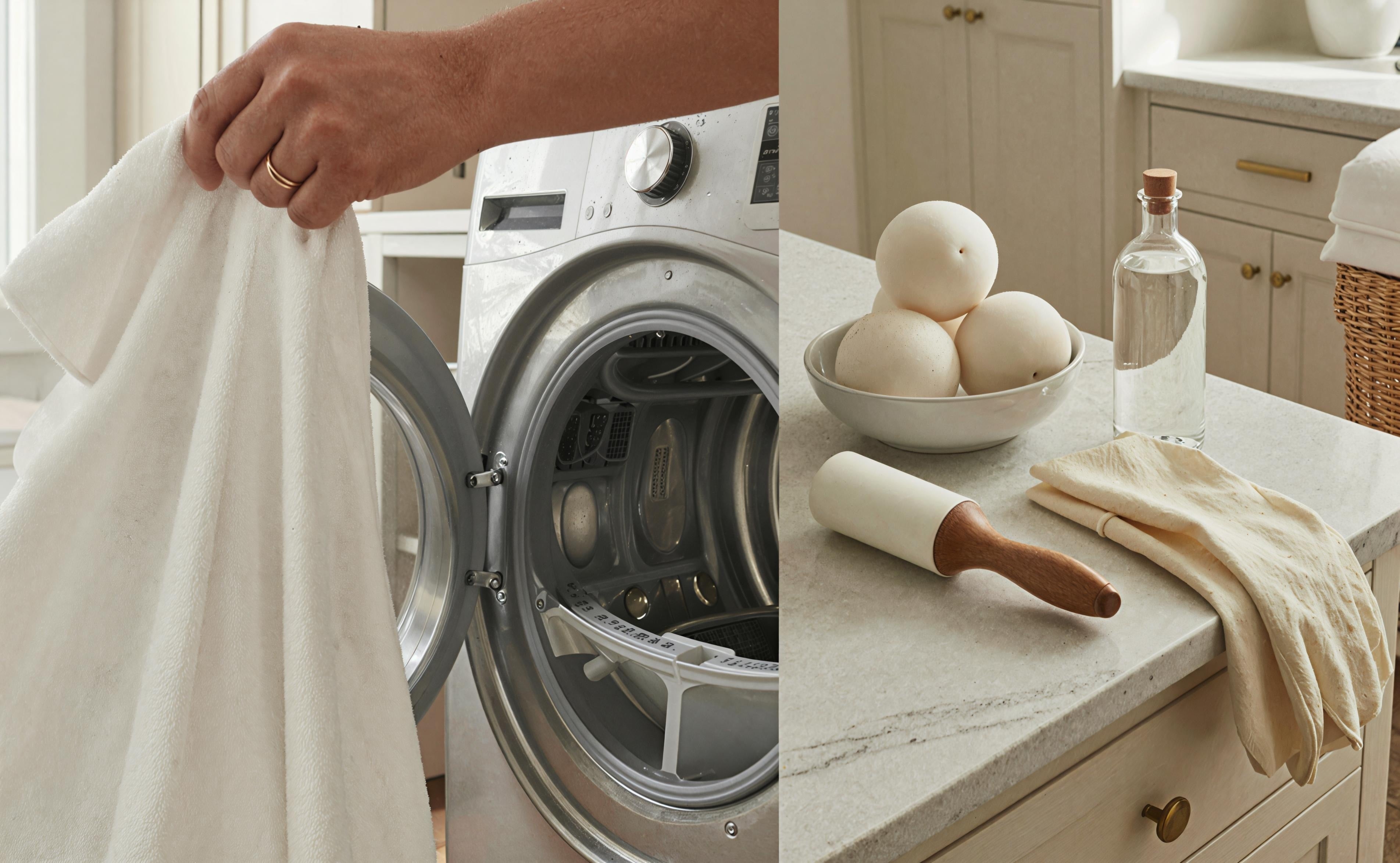
Brush it. Use a soft clothes brush, working in one direction, to lift dust, hair and surface pilling.
-
Tumble it. Place it in the tumble dryer for 15 minutes on a cool or air-only cycle with two dryer balls. This helps remove dust and restore the pile.
-
Spot-clean marks. Use cold water and a small amount of wool detergent on a white cloth, blotting rather than rubbing.
-
Store it properly. Fold it rather than hanging it, then place it in a breathable cotton bag with cedar instead of mothballs.
A blanket rarely stays where you last left it. It drifts from bed to sofa, gets pulled over knees during a late film, then ends up folded again as if nothing happened. And then, in the wrong kind of daylight, you clock it. A faint trace of cooking. A little lint at the edge. That slightly flat feel where hands always grab the same corner.
Most people respond with the wash. It feels responsible. It also wears a good blanket faster than it deserves. Too much detergent, too much heat, too much agitation, and the fabric starts to lose its easy drape and soft lift.
So this is a different approach. A refresh, not a reset. The sort of care that takes minutes, keeps fibres in better shape, and makes the blanket feel ready again. If you want to picture it on your own bed or sofa, have a quick look at blankets and keep reading.
Why blankets feel stale before they look dirty
Most blankets do not become “dirty” in one dramatic moment. They slowly collect a few small things.
-
Humidity that sits in the weave, often from kitchens, bathrooms, or warm rooms with poor airflow
-
Surface debris, dust, lint, and pet hair that dulls the finish
-
Compression, where the blanket loses lift where it is handled most
That is why a fragrance spray rarely solves it. It adds a smell on top. It does not remove what is causing the problem.
The decision that stops you doing the wrong thing well
A refresh works when the blanket smells mildly lived in and looks a bit tired. It does not work when the blanket smells damp or musty.
Musty usually means moisture has lingered. Dry the blanket fully first with airflow. If the smell remains after proper drying, wash according to the care label.
If you are ever unsure what the symbols mean, care labels explained makes it clear.
A simple rule helps. If you would happily wear a jumper that smells like this, refresh the blanket. If you would not, wash it.
Air is the best refresh tool you already own
Airing sounds too simple, which is why people skip it. Yet it deals with the main issue behind that stale feeling, trapped humid air.
Drape the blanket open over a wide chair back, a rail, or the end of the bed. Do not fold it. Give it one to three hours, then turn it so both sides breathe.
Indoors by an open window works well. Outdoors works on a dry day, but avoid damp weather. Also be sensible with harsh sun if colour matters. If the piece has seen better days, it may be time to browse luxury blankets and start fresh.

The surface reset that brings back the “new” look
Once the blanket has aired, deal with what is sitting on the surface. This is where the visual payoff lives.
Lay the blanket flat on the bed and smooth it lightly with your hands. Then choose the gentlest tool that will lift debris without roughing the weave.
-
Soft clothing brush or velvet lint brush for wool and delicate blends
-
Lint roller for sturdier cotton, used with a light hand
-
Slightly damp microfibre cloth wiped in one direction for stubborn pet hair, followed by brushing to settle fibres
Work in one direction. Start with the corners and edges because they frame the blanket and take most handling.
If your blanket sits at the foot of the bed, a smoother base layer makes the whole thing look intentional. That is where bed linen earns its keep.
Steam is for texture, not cleanliness
Steam is useful, but it helps in a specific way. It relaxes fibres. It does not replace washing.
Use a handheld steamer. Hold it away from the surface so steam drifts over the blanket rather than soaking it. Keep moving in slow passes. Then leave the blanket open until it is fully dry.
Never press an iron onto a blanket. Always follow the care label, especially for wool blends and cashmere.

Small marks, handled early
Most overwashing starts with a small mark.
Blot with a clean cloth. Do not rub. Use cool water and a mild detergent suitable for delicates. Work from the outside toward the centre. Blot with a clean damp cloth, then blot dry. Dry flat with airflow.
If a mark smells sour, keeps returning, or spreads, a full wash is the safer choice.
What not to do, even if it seems convenient
-
Do not spray fragrance to freshen it. It can leave a film and trap odours.
-
Do not use very high heat unless the label allows it. Heat can shrink wool and flatten texture.
-
Do not overdry. Overdrying can make fibres harsher and increase static, which attracts lint.
-
Do not iron the blanket. If you use heat, use gentle steam from a distance.
-
Do not store in sealed plastic long term. Trapped humidity is a common cause of musty smells.
-
Do not store anything that is even slightly damp.
Storage is where freshness is won or lost
A blanket can be clean and still come out smelling like the cupboard. The culprit is usually trapped humidity.
Only store it when fully dry. Fold it loosely. Use a breathable cotton bag or a clean pillowcase. Keep it away from bathrooms, kitchens, and damp corners.
If your blanket stays on the bed, it also helps if the top layer does not migrate overnight. A well fitting duvet cover keeps the bed looking more composed, which makes the blanket look better by association.

A quick check before you put it back
Before you return the blanket to the bed or sofa, check three things.
-
Does it smell like itself again, not like cooking or cupboard
-
Does the surface look cleaner in daylight, especially at the edges
-
Does it feel softer where you normally touch it
If yes, you are done. If not, repeat airing and brushing. If the smell is damp or musty after proper drying, it is time to wash.
A Better Way to Keep It Beautiful
A luxury blanket is supposed to feel generous. It should drape well, look good without fuss, and make the room feel finished even on days when nothing else is. But the qualities that make it lovely are also the first things to suffer when it is treated like an everyday towel. Too much heat, too much detergent, too much agitation, and the blanket starts to lose its personality.
Refreshing is the quieter alternative. Air deals with the stale edge that comes from trapped humidity. Brushing removes the fine surface build up that dulls the finish and makes pet hair look worse than it is. Steam, used carefully, returns softness without leaving residue behind. Then storage does its part by keeping humidity away, so the blanket does not come out smelling like the place you hid it.
Over time, these habits do more than keep a blanket presentable. They keep it enjoyable. The kind of piece you reach for when the evening turns cold, the kind you fold at the foot of the bed because it makes the room look considered, the kind you keep using year after year because it still feels like it did at the start.
If you would like to be part of the Heritage Partnership, you receive friendly guidance on fibres, fit, and everyday care, along with thoughtful updates that help you look after your home textiles in a way that is practical, not fussy.