

When Does Linen Bedding Get Soft? Night 1 to Year 5
Does linen get softer with use
Yes, linen bedding gets softer with use. Most linen feels noticeably softer after three to five washes, as water and movement relax the flax fibres, then keeps smoothing and settling over the following months before reaching a stable, lived in softness by around year one.
- Soft enough to enjoy from the first night, unlike stiff new percale.
- Noticeably softer within the first three to five washes.
- Continues to break in over months into a laundered handle.
- Softens without weakening — stays strong as it ages.
- A gentle wash and air-dry speeds it up; avoid heavy fabric softeners.

If you want to browse while you read, keep bed linen open so you can picture the finish, the tones, and the overall look as linen settles into itself.
Quick answer
Most linen feels noticeably softer after 3 to 5 washes, then continues to become smoother and more settled over the following weeks. Long term feel depends on fibre quality, weave, washing temperature, drying heat, and how often you rotate sets.
Quick checklist
-
Expect crisp on night one
-
Feel the first big change after 3 to 5 washes
-
Avoid heavy detergent and conditioner build up
-
Keep heat moderate when drying
-
Rotate sets so each one rests
What linen feels like on night one
On the first night, linen often feels crisp and lightly textured. That is normal. Linen fibres are naturally strong, and the weave tends to hold a bit of structure before repeated washing relaxes it.
What you notice most often:
-
A dry, breathable feel rather than a slick feel
-
A slightly firmer hand feel at the edges and seams
-
Creases that look sharper at first

What changes after the first wash
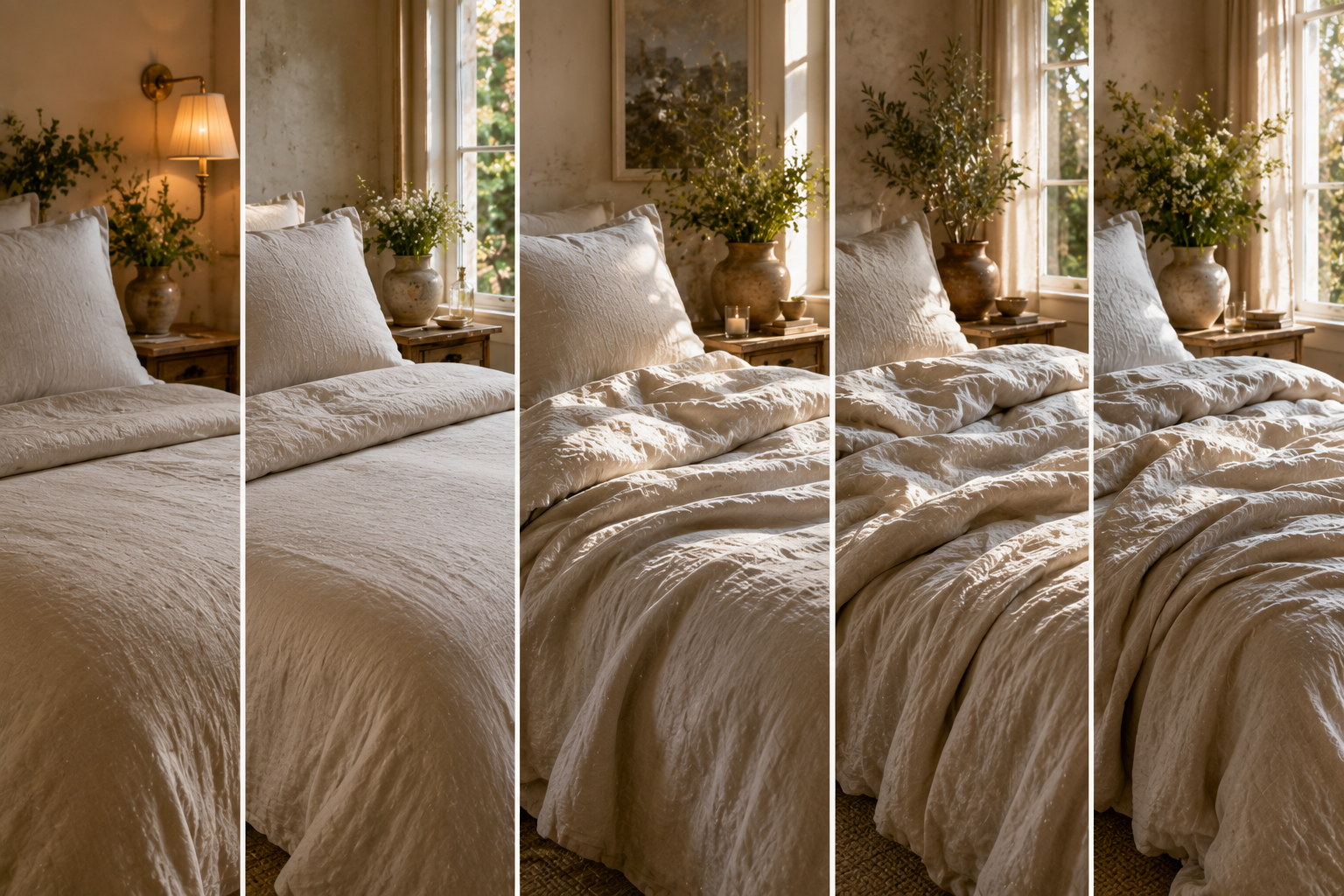
After the first wash, linen begins to relax. The fabric still has character, but the sharpness softens, and the surface feels less rigid.
What usually changes:
-
The fabric feels more pliable in the hand
-
Creases look more natural, less angular
-
The bed looks more inviting, even with minimal styling
A measured routine matters. Too much detergent leaves residue that can make the fabric feel slightly coated. If you want an easy reference for care symbols and temperatures, use bed linen care labels as your baseline.
When linen starts to feel genuinely soft
For most people, the real shift arrives around washes 3 to 5. The fibres have been cleaned, rinsed, and flexed enough times that the fabric loses that “new linen” resistance.
What you typically notice by wash five:
-
The fabric feels softer at contact points, especially pillowcases
-
The drape looks more settled at the mattress edge
-
The bed has a more composed finish, even without extra layers
If you are chasing a smoother look at the corners, fit is the hidden lever. A fitted sheet that actually matches your mattress depth reduces strain on the fabric and keeps the surface flatter. Explore fitted sheets if your corners slip or the sheet pulls tight.

What happens after three months
At around three months, linen tends to enter a steady phase. It feels familiar. It looks less like something you are testing and more like something you simply use.
Common three month traits:
-
A softer hand feel that still stays breathable
-
A drape that looks effortless rather than arranged
-
Less temptation to iron, because the texture looks intentional
This is also where you notice how your top layer behaves. A cover that sits neatly and stays in place makes the entire bed feel more considered. If your duvet shifts or the top layer looks unruly by morning, look at duvet covers for a cleaner finish.
What changes after one year
After a year, linen usually reaches a stable softness. It does not keep changing dramatically, but it continues to refine. The fabric feels more even, and the bed looks more “yours.”
What improves:
-
Consistent softness across the set
-
A more flattering fall over the bed
-
A surface that feels gentler without losing structure
What can show wear if care is harsh:
-
Faster thinning at the centre of the fitted sheet
-
Slight distortion if the sheet is pulled too tight on the mattress
-
A rougher feel if residue builds up over time
Year two to year five
By year two, linen shows its real quality, because it has been lived with. Good linen does not collapse into limpness. It keeps a certain backbone, but the surface becomes smoother, softer, more settled. It feels like the fabric has learned the shape of your home.
To keep a set looking beautiful over the long term:
-
Rotate between at least two sets so fibres rest
-
Keep drying heat moderate, especially for regular weekly washing
-
Avoid overloading the machine, so sheets rinse properly
-
Wash often enough for freshness, but not so often that you overwork the fabric

Why does linen bedding feel rough at first
Linen often feels rougher at first because the fibres are naturally strong and slightly textured, and the weave holds its shape before it has been softened by movement, water, and repeated rinsing. New linen also tends to have a crisp finish from production that can make it feel firmer on the skin, especially at seams and edges. None of this is a fault. It is simply linen at the beginning of its life. With washing and use, the fibres flex, the surface relaxes, and the fabric starts to feel smoother while keeping that breathable, dry freshness linen is known for.
How many washes until linen bedding feels soft
Most people notice a meaningful shift after 3 to 5 washes, particularly on pillowcases and the top section of the sheet where your skin makes the most contact. After that, linen keeps improving gradually over the next few weeks as the fibres loosen and the fabric drapes more naturally. The exact timing depends on the weave and weight of the linen, your detergent and rinse habits, water hardness, and drying method. If you want the softening to feel consistent, the biggest difference usually comes from a measured detergent dose, proper rinsing, and avoiding very high heat drying.
Does linen keep getting softer forever
Linen softens quickly at first, then the changes become more subtle. After the early “break in” period, the fabric usually continues to feel smoother and more pliable over months and years, but it does not soften in a straight line forever. Instead, it reaches a stable, lived in softness where the texture feels pleasant and the drape looks more effortless. Over time, what you notice more is the quality of the wear. Good linen becomes comfortably familiar without collapsing into limpness, as long as care stays gentle and consistent and the fabric is not overworked by harsh heat or heavy detergent build up.
Does tumble drying make linen softer
Moderate tumble drying can help soften linen because the movement flexes the fibres and reduces stiffness. Removing linen while it is still slightly warm can also help it feel smoother once folded or placed back on the bed. The risk is heat. Very high heat can gradually weaken fibres, increase shrinkage, and speed up wear, especially on fitted sheets that already take more strain. The best balance is usually a moderate heat setting, avoiding overdrying, and finishing with a quick shake and fold so the fabric settles neatly without being cooked.
Why does my linen fitted sheet wear faster than the rest
The fitted sheet takes the most friction and the most tension. Night after night it sits under the full weight and movement of your body, and it is pulled tightly around corners and elasticated edges. If the mattress depth is not a perfect match, the sheet is stretched harder, which increases stress at the corners and along the centre where you sleep most. Frequent hot drying can also accelerate thinning, and overloading the washer can increase abrasion because the fabric rubs more aggressively during the cycle. Rotating sets, choosing the correct depth, rinsing well, and keeping drying heat sensible are the simplest ways to extend fitted sheet life.
The Linen Moment: When the Bed Starts to Belong to You
There is a point when linen stops feeling like a purchase and starts feeling like a place. It is not dramatic. It does not announce itself. It arrives quietly, somewhere between a familiar wash day and an ordinary evening, when you notice the fabric has changed its mind about being new. The surface feels easier under the hand. The creases look less like disorder and more like character. The corners sit the way they should, as if the bedding has learned the shape of your mattress and decided to cooperate.
The bed becomes simpler to live with. You shake the sheet once, smooth it once, and it settles. You pull the duvet up and the room looks put together, even if the day is not. Linen does that when it is good. It keeps its honesty, but it gains softness and a kind of steadiness that makes everything else feel more in place. It does not shout. It improves.
Care for Linen Beautifully, Season After Season
Linen is a fabric you live with for years, and the pleasure of it grows when you know how to care for it season by season. By joining the Heritage Partnership you gain a direct line to our linen experts for washing, storage and rotation advice, along with considered care notes through the year. Members also enjoy private previews and first access to new linen arrivals, which makes it easy to add to a set you love before a favourite colour or weight sells through.